Warehouse automation continues to transform manufacturing and distribution operations as facilities work to improve efficiency and maintain more consistent production flow. Many companies invest in automated systems because they want faster throughput and better long-term operational performance. However, equipment alone does not guarantee success. The overlooked factors that impact warehouse automation often create the biggest operational challenges after installation. Many facilities focus heavily on machine capabilities during the buying process while underestimating how daily operating conditions influence long-term automation performance.
Facilities that overlook operational planning often experience bottlenecks, downtime, and inconsistent production flow even after making significant automation investments. Successful automation strategies require companies to evaluate how products move throughout the warehouse and how employees interact with the system during normal operations. Facilities that plan carefully for real production conditions usually achieve stronger long-term results and fewer operational disruptions.
Workflow Integration Often Determines SuccessMany automation projects fail to meet expectations because facilities treat automated equipment as an isolated upgrade instead of part of a connected operational process. A palletizer may perform efficiently during testing, but surrounding operations can still reduce overall throughput. Conveyor timing issues and uneven product flow frequently interrupt production during busy operating periods.
Facilities achieve stronger results when they evaluate how products move from packaging lines through palletizing and shipping operations. Each stage of production must operate together consistently to maintain efficiency throughout the warehouse. If products accumulate between stages or arrive unevenly, automated systems stop and restart more frequently, which increases wear on equipment and reduces overall productivity.
Workflow planning also affects long-term scalability. Production demands often change because of seasonal volume increases or packaging updates. Facilities that install flexible automation systems adapt more easily without making costly operational changes later. Companies that prioritize workflow coordination during the planning process usually experience fewer disruptions after installation.
Product Variability Creates Daily ChallengesAutomated systems depend on consistency, but most warehouses handle products that vary throughout production cycles. Small differences in packaging materials or case dimensions can interrupt automated processes and reduce operational efficiency. These challenges affect food and beverage operations especially often because manufacturers regularly change packaging formats to support new products and retailer requirements.
Manual operations allow employees to adjust naturally when products shift slightly during handling. Automated systems require more predictable product movement to maintain stable throughput and pallet quality. If equipment cannot handle operational variability effectively, facilities often experience jams, unstable pallet loads, and unnecessary downtime that slows production.
Facilities sometimes underestimate how often these inconsistencies occur until automation begins operating on the production floor. Flexible automation systems help companies manage changing packaging requirements without constant manual adjustments. Equipment that supports multiple product sizes allows facilities to maintain efficiency while adapting to changing production demands over time.
Facility Layout Affects Long-Term EfficiencyWarehouse layout has a major impact on automation performance, yet many facilities attempt to fit new systems into buildings that lack the space and structure modern automation requires. Limited floor space and restricted conveyor pathways can reduce operational efficiency significantly. Poor layout planning often increases forklift congestion and forces employees to move products unnecessarily between production stages.
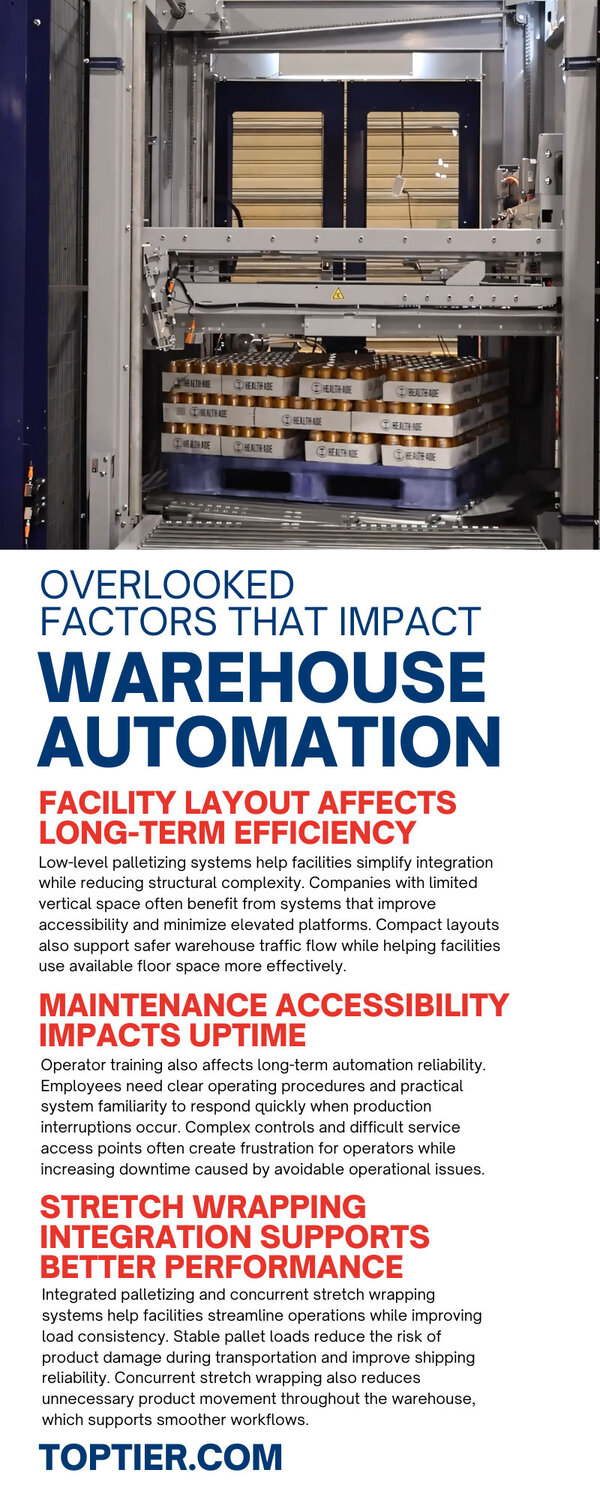
Low-level palletizing systems help facilities simplify integration while reducing structural complexity. Companies with limited vertical space often benefit from systems that improve accessibility and minimize elevated platforms. Compact layouts also support safer warehouse traffic flow while helping facilities use available floor space more effectively.
Facilities must design layouts that support both automation performance and employee safety. Forklift routes and staging areas should work together without interfering with production flow. Companies that prioritize long-term layout efficiency during automation planning often position themselves for smoother expansion in the future.
Maintenance Accessibility Impacts UptimeMany automation projects focus heavily on startup timelines and production capacity while giving less attention to maintenance accessibility. Automated systems require regular inspections and adjustments to maintain reliable performance. If technicians cannot access critical areas easily, routine maintenance becomes slower and more difficult, which increases the likelihood of unexpected downtime.
Operator training also affects long-term automation reliability. Employees need clear operating procedures and practical system familiarity to respond quickly when production interruptions occur. Complex controls and difficult service access points often create frustration for operators while increasing downtime caused by avoidable operational issues.
Maintenance planning also influences workplace safety. Equipment designed with safer access points and simplified controls helps reduce risks during inspections and repairs. Facilities that prioritize usability alongside production performance often maintain stronger uptime throughout the life of the system.
Stretch Wrapping Integration Supports Better PerformanceMany facilities evaluate palletizing and stretch wrapping separately even though both processes directly affect shipping performance. When pallet loads move between disconnected systems, companies create additional handling steps that reduce load stability and slow production flow. Delays between palletizing and wrapping can also create unnecessary congestion during high-volume operating periods.
Integrated palletizing and concurrent stretch wrapping systems help facilities streamline operations while improving load consistency. Stable pallet loads reduce the risk of product damage during transportation and improve shipping reliability. Concurrent stretch wrapping also reduces unnecessary product movement throughout the warehouse, which supports smoother workflows.
Load quality has become increasingly important as transportation costs continue to rise. Consistent load containment helps facilities reduce damaged shipments and maintain more efficient warehouse operations. Companies that integrate palletizing and wrapping operations effectively often improve both operational efficiency and long-term shipping performance.
Planning for Long-Term Automation SuccessThe overlooked factors that impact warehouse automation often determine whether facilities achieve lasting operational improvements or continue struggling with inefficiencies after installation. Workflow integration, product variability, facility layout, maintenance accessibility, and stretch wrapping coordination all influence automation performance far beyond basic equipment specifications. Companies that evaluate these operational factors early in the planning process usually achieve stronger long-term results while avoiding unnecessary downtime and production bottlenecks.
TopTier helps facilities address these operational challenges with low-level case palletizers designed for accessibility, flexibility, and long-term efficiency. The new TopTier TTX series supports streamlined palletizing performance while helping manufacturers maintain consistent production flow, improve load stability, and adapt more effectively to changing operational demands. Request a quote today to enhance your palletizing operations.