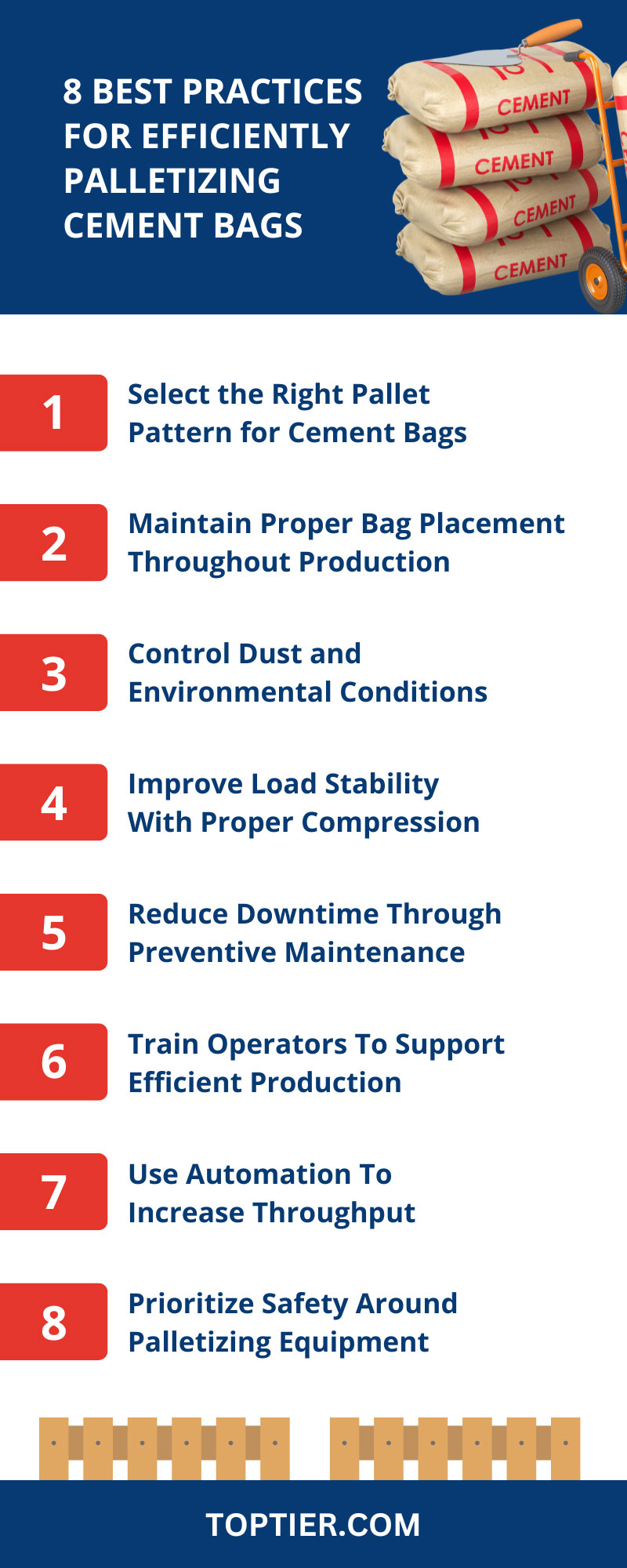
Cement bag palletizing demands precision and dependable performance under pressure. Facilities that handle cement products work with heavy loads in abrasive environments that place constant strain on equipment. Following the best practices for efficiently palletizing cement bags helps operations improve load stability while reducing product damage across every shift. When palletizing systems operate consistently, manufacturers can protect product quality and support safer warehouse conditions during transportation.
Select the Right Pallet Pattern for Cement BagsPallet patterns directly affect load integrity. Cement bags shift easily during transport because of their weight and flexible packaging. A poorly designed pattern creates weak points within the load that can collapse under pressure or movement. Facilities should use interlocking patterns that distribute weight evenly across the pallet surface.
Bag dimensions also influence pallet design. Larger bags require tighter alignment to prevent overhang, while smaller bags often need additional layer support to maintain stack integrity. Consistent layer formation reduces leaning and helps the load remain stable during stretch wrapping and shipping.
Operations should also evaluate pallet size alongside product dimensions. A pallet that does not properly support the bag footprint increases the risk of edge crushing and unstable stacking. Matching the pallet configuration to the cement bag size improves overall load performance and reduces waste from damaged product.
Maintain Proper Bag Placement Throughout ProductionPrecise bag placement keeps loads square and balanced. Misaligned bags create instability that compounds as additional layers build upward. Even minor placement inconsistencies can lead to leaning loads that create transportation risks and interrupt downstream handling.
Automated palletizing systems help maintain repeatable placement accuracy. Consistent positioning allows every layer to support the next layer evenly. This approach strengthens the load while reducing pressure points that can tear packaging or shift product weight.
Facilities should also monitor conveyor speeds and bag orientation before the palletizing stage. Uneven product flow can affect placement timing and create inconsistent stacking results. Maintaining controlled product movement improves pallet quality and helps operators avoid frequent manual corrections.
Control Dust and Environmental ConditionsCement facilities generate dust that affects both equipment performance and product handling. Dust accumulation interferes with sensors, conveyor tracking, and robotic movement. Over time, this buildup can reduce system efficiency and increase maintenance requirements.
Routine cleaning procedures help palletizing equipment operate consistently. Facilities should inspect sensors, guarding, and conveyor surfaces frequently to prevent dust-related interruptions. Keeping equipment clean also supports accurate bag detection and reliable load formation.
Temperature and humidity can also affect cement bag performance. Excess moisture weakens paper packaging and increases the likelihood of bag deformation during stacking. Dry, controlled storage conditions help maintain bag shape and improve stacking consistency throughout the palletizing process.
Improve Load Stability With Proper CompressionLoad compression plays an important role in cement bag palletizing. Bags that remain loose during stacking can shift during transport or collapse under the weight of upper layers. Controlled compression creates tighter loads that move more safely through warehouses and shipping networks.
Stretch wrapping systems should apply consistent containment force without damaging the bags. Excessive wrapping pressure can deform the load, while insufficient containment allows movement during transit. Proper film application secures the load while preserving product integrity.
Concurrent stretch wrapping systems can further improve efficiency. By combining palletizing and wrapping into one streamlined process, operations reduce handling time while improving load consistency. This approach also supports safer operations by minimizing manual interaction with unstable loads.
Reduce Downtime Through Preventive MaintenanceCement production environments place heavy demands on palletizing equipment. Abrasive dust, continuous operation, and heavy product loads can accelerate wear on moving components. Preventive maintenance helps facilities avoid unexpected downtime and maintain steady production flow.
Operators should inspect conveyors, motors, grippers, and sensors regularly. Small mechanical issues can quickly affect pallet quality when left unresolved. Replacing worn components before failure helps maintain consistent equipment performance and prevents interruptions during peak production periods.
Software updates and calibration checks also support long-term efficiency. Modern palletizing systems rely on precise programming to maintain accurate bag placement. Routine system verification ensures equipment continues operating according to production requirements.
Train Operators To Support Efficient ProductionEven highly automated palletizing systems require knowledgeable operators. Proper training helps teams identify issues early and maintain efficient production flow. Operators who understand palletizing principles can respond quickly to alignment problems, conveyor disruptions, or wrapping inconsistencies.
Training should focus on equipment operation as well as load quality standards. Teams should understand how bag placement, pallet alignment, and wrapping tension affect overall load performance. This knowledge helps operators maintain consistent results across changing production demands.
Facilities should also encourage routine communication between maintenance staff and production teams. Sharing operational feedback allows teams to identify recurring issues before they affect throughput or product quality. Strong coordination improves overall system reliability and supports long-term operational efficiency.
Use Automation To Increase ThroughputAutomated palletizing systems help cement manufacturers handle demanding production schedules more efficiently. Manual palletizing methods often struggle to maintain consistent output when handling heavy cement bags over extended shifts. Automation improves repeatability while reducing physical strain on workers.
Robotic palletizers provide flexibility for facilities handling multiple bag sizes or pallet configurations. These systems adapt quickly to changing production needs while maintaining accurate placement. Conventional palletizers also provide high-speed performance for operations focused on continuous large-volume production.
Integrated automation improves workflow throughout the facility. Consistent pallet formation supports smoother stretch wrapping, warehouse storage, and shipping operations. Facilities that invest in automated palletizing often reduce product damage while improving overall line efficiency.
Prioritize Safety Around Palletizing EquipmentCement bag palletizing systems handle heavy products at high speeds. Safety procedures help protect operators while supporting uninterrupted production. Clearly marked safety zones and guarding systems reduce the risk of accidental contact with moving equipment.
Facilities should establish consistent inspection procedures before each shift. Operators should verify sensor performance, emergency stop functionality, and conveyor conditions before production begins. Early identification of equipment concerns helps prevent accidents and minimizes unplanned downtime.
Proper ergonomics also matter in partially automated operations. Reducing repetitive lifting and minimizing manual corrections helps lower worker fatigue. Safer working conditions support stronger productivity and improve operational consistency throughout the facility.
Why TopTier Supports Efficient Cement Bag PalletizingTopTier understands the challenges that come with handling heavy cement bags in demanding production environments. Following the best practices for efficiently palletizing cement bags helps manufacturers improve load stability, maintain throughput, and reduce unnecessary product damage. Reliable palletizing systems allow facilities to move products safely while supporting long-term operational efficiency.
As a palletizing equipment manufacturer, TopTier provides automated solutions designed to improve consistency, safety, and productivity across industrial operations. From conventional systems to robotic palletizers with concurrent stretch wrapping capabilities, we help manufacturers build stable loads while optimizing every stage of the palletizing process. Contact us for more information.