Pallet stability plays a critical role in maintaining product integrity, reducing waste, and ensuring safe transport across the supply chain. When operations handle heavy, flexible materials like feed bags, even small inconsistencies in stacking or handling can lead to shifting loads and damaged goods. Improving pallet stability for feed bag loads requires a thoughtful approach that combines proper stacking patterns, equipment precision, and load containment strategies. This guide outlines practical methods to help you build stronger, more reliable pallet loads.
Understanding the Nature of Feed Bag Loads
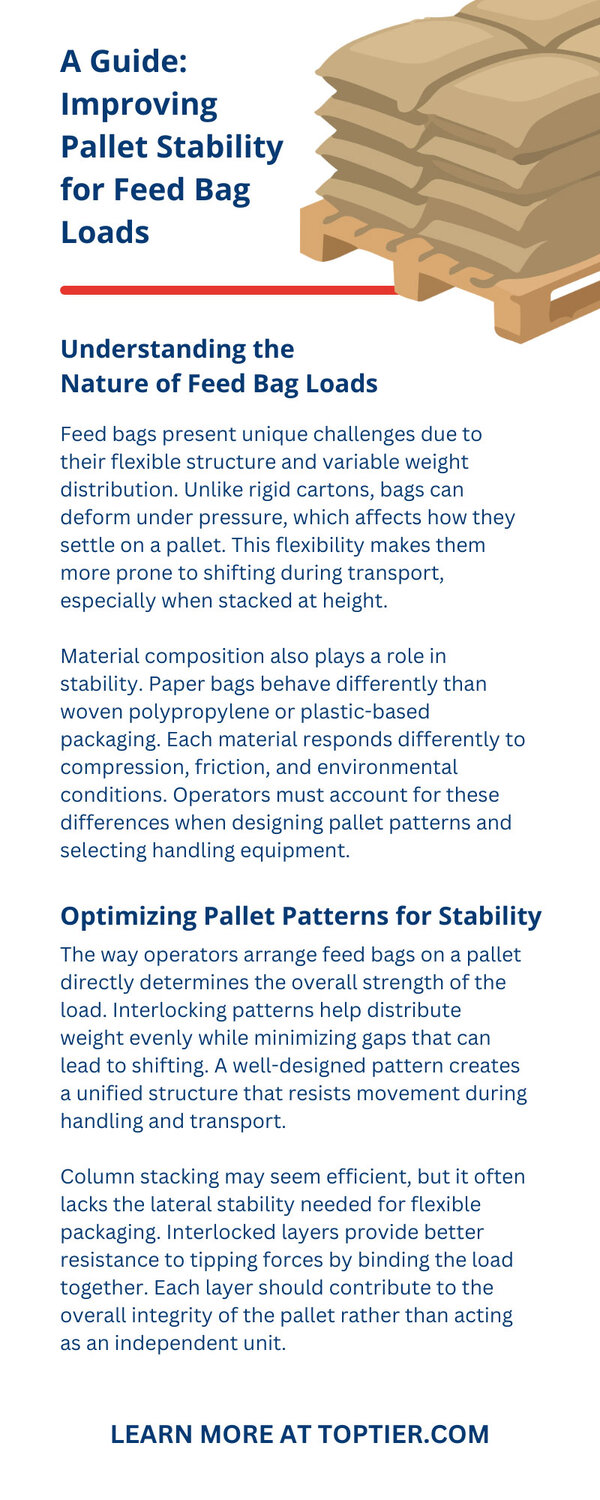
Feed bags present unique challenges due to their flexible structure and variable weight distribution. Unlike rigid cartons, bags can deform under pressure, which affects how they settle on a pallet. This flexibility makes them more prone to shifting during transport, especially when stacked at height.
Material composition also plays a role in stability. Paper bags behave differently than woven polypropylene or plastic-based packaging. Each material responds differently to compression, friction, and environmental conditions. Operators must account for these differences when designing pallet patterns and selecting handling equipment.
Environmental factors further complicate stability. Temperature changes and humidity can impact bag integrity and friction between layers. Inconsistent conditions often lead to unpredictable load behavior, making it essential to standardize processes wherever possible.
Optimizing Pallet Patterns for Stability
The way operators arrange feed bags on a pallet directly determines the overall strength of the load. Interlocking patterns help distribute weight evenly while minimizing gaps that can lead to shifting. A well-designed pattern creates a unified structure that resists movement during handling and transport.
Column stacking may seem efficient, but it often lacks the lateral stability needed for flexible packaging. Interlocked layers provide better resistance to tipping forces by binding the load together. Each layer should contribute to the overall integrity of the pallet rather than acting as an independent unit.
Layer consistency is equally important. Variations in alignment or placement can weaken the structure and create pressure points. Automated systems help maintain uniformity, ensuring each layer matches the intended design. This consistency leads to stronger loads and fewer failures in transit.
Managing Weight Distribution and Load Height
Balanced weight distribution is essential for maintaining pallet stability. Uneven loads increase the risk of leaning or collapse, especially when stacked at higher levels. Operators should ensure that each layer distributes weight evenly across the pallet footprint.
Load height also impacts stability. Taller loads increase the center of gravity, making them more susceptible to tipping. While maximizing pallet height can improve efficiency, operators must balance it against the need for a stable load. Careful evaluation of height limits helps prevent instability without sacrificing throughput.
Base layer strength plays a foundational role in supporting the entire load. A solid base ensures that upper layers remain secure. Weak or uneven base layers often lead to cascading failures that compromise the entire pallet.
The Role of Equipment in Building Stable Loads
Modern palletizing equipment significantly improves consistency and precision in load building. Automated systems place each bag accurately, reducing human error and ensuring uniform stacking patterns. This level of control is difficult to achieve with manual processes.
High-quality palletizers also adjust to variations in bag size or weight. These adjustments help maintain alignment and prevent gaps within the load. Advanced systems use programmed patterns to optimize stability while maintaining efficient throughput.
Equipment reliability is another key factor. Inconsistent performance leads to irregular stacking, which undermines load integrity. Investing in dependable machinery ensures that each pallet meets the same stability standards.
TopTier has built its reputation on delivering innovative palletizing solutions that prioritize consistency and efficiency. Our systems reflect years of expertise in designing equipment that supports stable, high-quality loads.
Enhancing Load Containment Methods
Even with a well-constructed pallet, proper containment is necessary to maintain stability during transport. Stretch wrapping provides essential support by securing the load and preventing movement. The quality and application of the wrap significantly influence its effectiveness.
Tension control plays a critical role in containment. Too little tension fails to secure the load, while excessive tension can deform bags and weaken the structure. Achieving the right balance ensures that the load remains intact without compromising product integrity.
Film selection also matters. Different types of stretch film offer varying levels of strength and elasticity. Choosing the appropriate film for feed bag loads helps maintain stability under different conditions. Consistent wrapping techniques further enhance performance by ensuring even coverage across the entire pallet.
Reducing Human Error Through Automation
Manual palletizing introduces variability that can compromise stability. Differences in technique, fatigue, and workload all contribute to inconsistent results. Automation addresses these challenges by standardizing the palletizing process.
Automated systems follow precise programming, ensuring the correct placement of each bag. This consistency improves load quality while reducing the risk of damage. Operators can focus on monitoring performance rather than manually stacking products.
Automation also improves safety within the facility. Handling heavy feed bags repeatedly increases the risk of injury. By reducing manual involvement, companies create a safer working environment while maintaining high levels of productivity.
Monitoring and Continuous Improvement
Improving pallet stability is not a one-time effort. Ongoing monitoring helps identify areas for improvement and ensures that processes remain effective over time. Regular inspections of pallet loads can reveal patterns of instability or recurring issues.
Data collection plays an important role in this process. Tracking load performance during transport provides valuable insights into how pallets behave under real-world conditions. This information allows operators to refine stacking patterns and containment methods.
Training also supports continuous improvement. Ensuring that staff understand best practices helps maintain consistency across operations. Even in automated environments, knowledgeable operators contribute to better outcomes by identifying potential issues early.
Adapting To Changing Operational Needs
As production demands evolve, palletizing strategies must adapt to maintain stability. Changes in bag design, production volume, or distribution requirements can all impact load performance. Flexible systems allow operators to adjust patterns and processes as needed.
Scalability is an important consideration when selecting equipment. Systems that accommodate growth help maintain efficiency without sacrificing stability. Investing in adaptable solutions ensures long-term success in a dynamic operational environment.
Collaboration between teams also supports adaptability. Communication between production, packaging, and logistics teams helps align strategies and maintain consistent standards. A coordinated approach leads to stronger, more reliable pallet loads.
Strengthening Your Palletizing Process With the Right Solution
Improving pallet stability for feed bag loads requires a combination of thoughtful design, consistent execution, and reliable equipment. By focusing on stacking patterns, weight distribution, and containment methods, operations can significantly reduce product damage and improve efficiency. Automation plays a central role in achieving these goals by delivering precision and consistency that manual processes cannot match.
TopTier supports these efforts with high-level infeed palletizers designed to optimize your palletizing process. Our systems deliver consistent load building while integrating advanced features that enhance stability and efficiency. By investing in the right technology, your operation can achieve stronger pallet loads and improved performance across the supply chain. Request a quote today to learn more.
Evaluating palletizing solutions for your facility?
Download our free Palletizing Readiness Checklist to help your team evaluate throughput goals, layout considerations, and implementation planning before investing in automation.
Download the Checklist