Manufacturers expect end-of-line equipment to do more than repeat a fixed motion. Modern palletizing systems must respond to changing products, maintain stable loads, support operators, and keep production moving when conditions shift.
That is why understanding how AI and smart automation are changing end-of-line palletizing matters for facilities that want more consistent performance without adding unnecessary complexity. As controls, sensors, software, and connected equipment become more capable, manufacturers can make palletizing decisions with better information while improving load quality and reducing avoidable product damage.
Smarter Controls Make Palletizing More ResponsiveSmart automation starts with the ability to collect operating information and use it to guide equipment behavior. Sensors and controls can confirm product position, monitor machine conditions, and coordinate movements. Instead of relying only on fixed mechanical sequences, an automated system can use real-time inputs to keep the process aligned with production requirements.
For palletizing applications, that responsiveness supports more dependable load formation. A case that enters at the wrong orientation or position can affect an entire layer, creating gaps that weaken the finished load. TopTier addresses this challenge with technologies designed to positively control product handling and confirm orientation before row building. Accurate positioning helps facilities create repeatable patterns, which can reduce damaged loads and limit product waste during storage or transportation.
A well-designed HMI can centralize setup, changeovers, manual functions, and diagnostic information. TopTier's low-infeed palletizers, for example, use Easy Stack Pro™ HMI capabilities that allow operators to access stored patterns and create new configurations without turning every product change into a programming project.
AI Can Strengthen Data-Driven Decision-MakingAI adds another layer of potential by helping automation systems interpret larger amounts of operating data. In end-of-line environments, that capability can support condition monitoring, pattern optimization, and more informed maintenance decisions. By turning operating data into actionable information, AI can help teams identify changes earlier and respond with greater consistency.
As AI-enabled tools mature, manufacturers may use historical machine behavior to identify patterns that precede a fault or performance decline. Maintenance teams could then investigate developing issues before they cause a longer interruption. This approach can improve uptime by shifting attention toward equipment that shows signs of change instead of relying only on fixed maintenance intervals.
Software can evaluate product dimensions, load requirements, and available patterns to help teams choose configurations that support stability. The practical value comes from making complex decisions faster while maintaining the application knowledge needed to protect products.
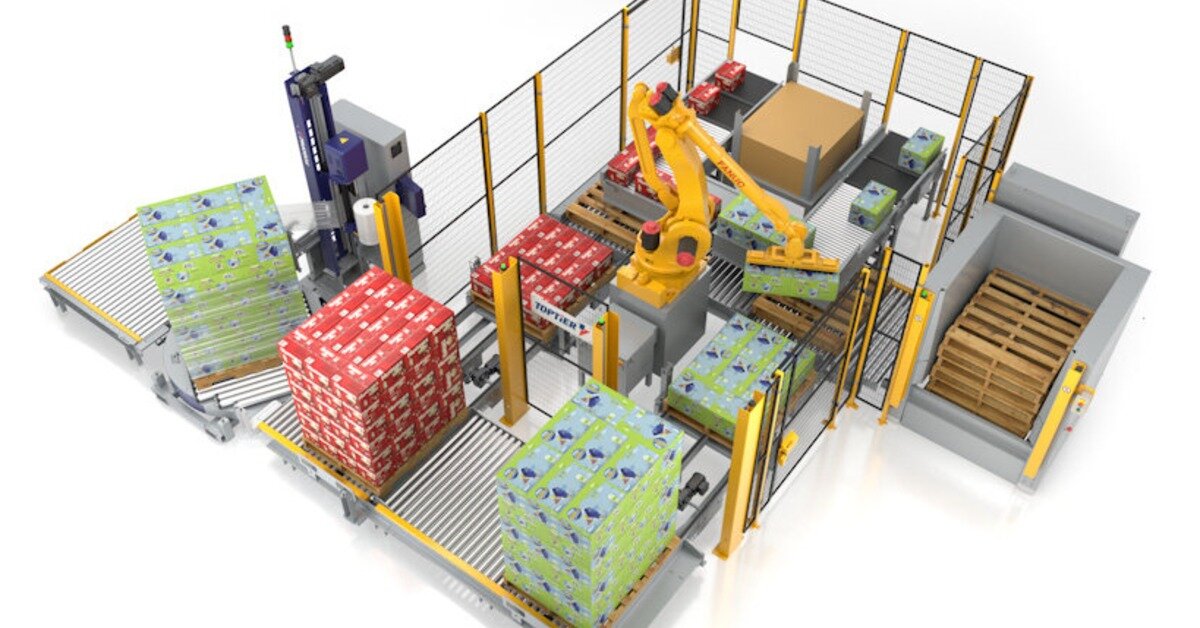
Robotic palletizers already give manufacturers flexibility when they handle multiple package sizes or product formats. Smart controls extend that advantage by making pattern creation, changeovers, and motion coordination easier to manage. Facilities can adapt the cell to changing production needs without expecting operators to become robot programmers.
TopTier's robotic palletizers combine robotic motion with product-handling methods designed around load quality. The system can support products from the bottom during handling, then use four-sided clamping to center a completed layer before depositing it.
That distinction matters because robotic palletizing involves more than choosing an arm with enough payload. Engineers must consider package rigidity, surface characteristics, layer patterns, infeed conditions, and end-of-arm tooling. Smart automation works best when the mechanical handling strategy matches the product. When those elements work together, facilities can achieve more consistent loads while reducing the handling errors that contribute to crushed cases, unstable pallets, or rework.
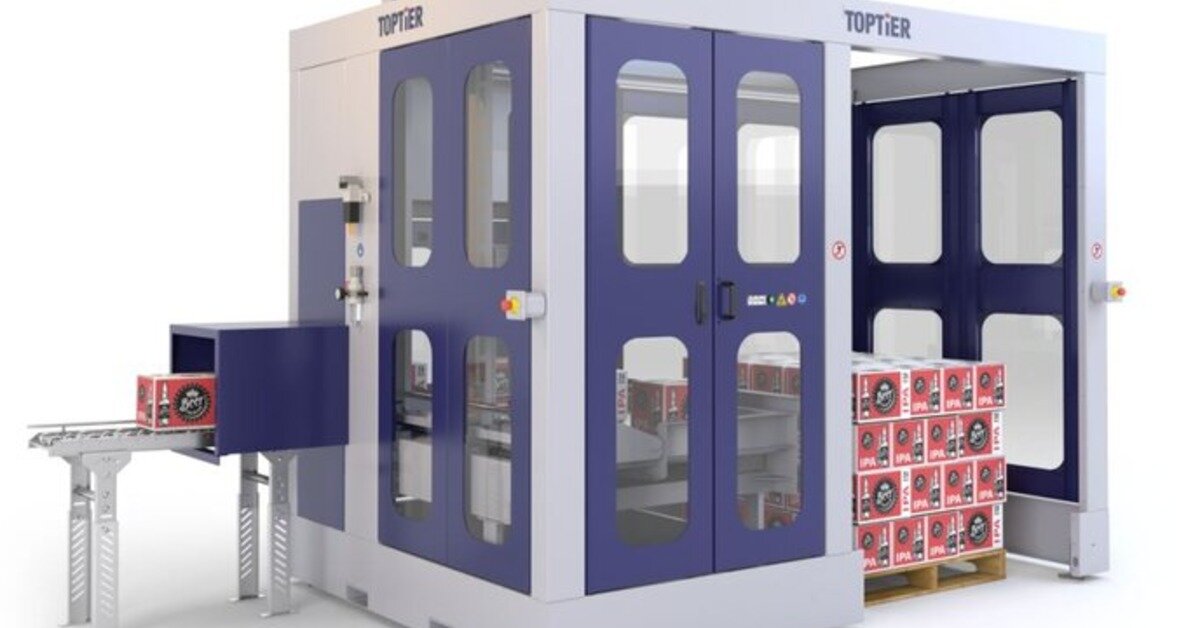
Conventional Palletizers Also Benefit From Smarter TechnologyAI discussions often focus on robots, but conventional palletizers can benefit just as much from advanced controls and connected automation. High-volume lines with consistent package dimensions may favor row-forming equipment because it can deliver dependable performance with controlled product movement. Smarter sensing and pattern management can make that established mechanical approach even more precise.
TopTier's conventional palletizing solutions combine automated product handling with technologies that support optimized pallet patterns and integration into production lines. For facilities with stable product flow, this approach can reduce variation from load to load. Consistency matters because a repeatable pattern helps prevent shifted cases and reduces the chance that employees need to rebuild a pallet before shipment.
Production rate, package type, available space, and expected SKU variation all affect the decision. Smart automation improves either platform, but it cannot compensate for equipment that does not fit the actual production process.
Integrated Wrapping Connects Load Building and ContainmentA smart end-of-line system should treat palletizing and load containment as connected processes. If a palletizer forms an accurate load but the wrapping process applies inconsistent containment, the finished pallet can still shift during handling. Integrating these steps creates an opportunity to control load quality from the first layer through final discharge.
TopTier's concurrent stretch wrapping technology wraps the load while the palletizer continues building it. The system controls film dispensing according to load size and position, while automatic film-break recovery helps maintain operation without requiring routine operator intervention. Because wrapping occurs during load formation, unstable products can receive containment before the full pallet is complete.
Facilities can reduce film waste through more controlled application and lower the risk of damaged goods by improving load containment. They can also preserve floor space because palletizing and wrapping occur within one coordinated system rather than at separate machines.
The value of smart automation depends on how well the technology solves a real production problem. Manufacturers should begin with the load itself: product characteristics, desired pattern, required throughput, and containment needs. From there, engineers can determine whether robotic or conventional palletizing provides the right foundation and which automation features will improve the application.
A fast palletizer cannot improve overall output if inconsistent infeed creates repeated interruptions or finished pallets cannot exit efficiently. Coordinated controls help the entire end-of-line process operate as one system rather than as isolated pieces of equipment.
Prepare End-Of-Line Operations for Smarter AutomationUnderstanding how AI and smart automation are changing end-of-line palletizing helps manufacturers focus on practical improvements instead of technology for its own sake. Better controls can improve load formation, support faster troubleshooting, and give operators more useful information, while integrated automation can reduce product damage and improve uptime.
TopTier incorporates these principles into its robotic and conventional palletizing solutions, using concurrent stretch wrapping to stabilize loads throughout the palletizing process. By matching smart technology to the product, production rate, and facility layout, manufacturers can create a more consistent end-of-line process that remains adaptable as operating requirements change.