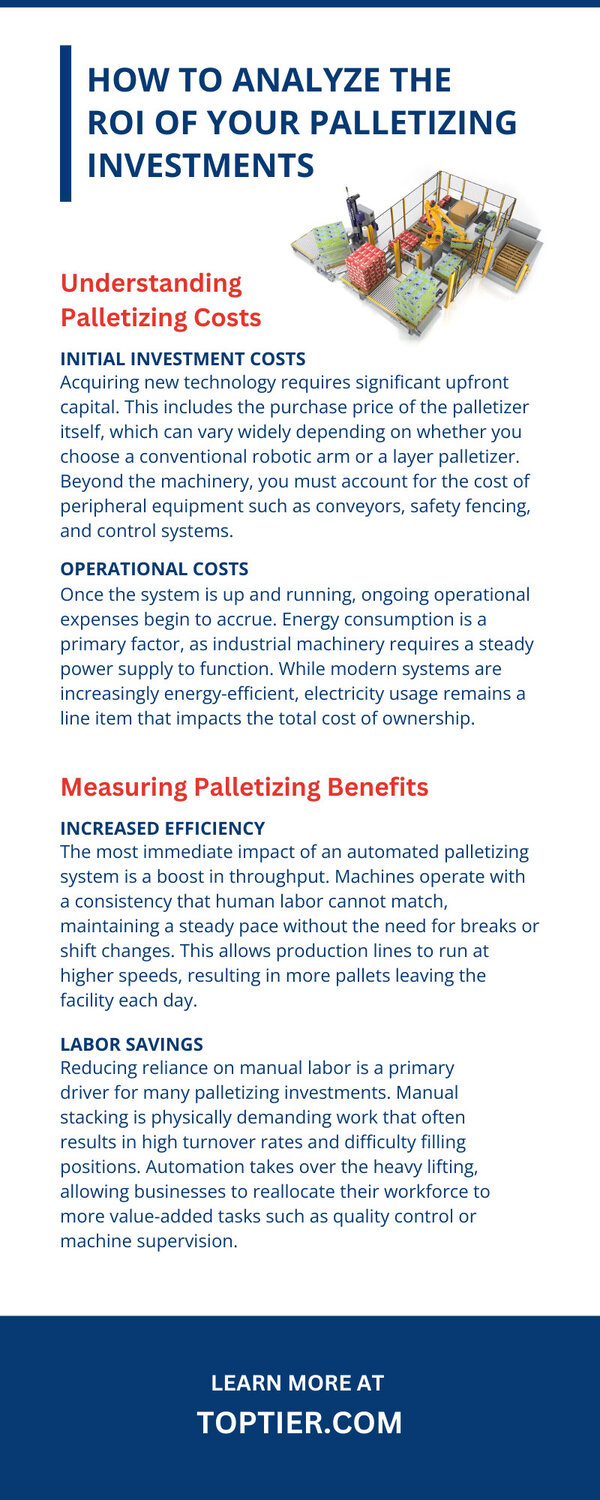
Palletizing, the process of stacking and securing products onto pallets for storage or shipment, is a critical supply chain link. For many businesses, automating this process is a significant step toward modernizing operations and scaling production. While new machinery and increased output are appealing, a sound business decision requires looking beyond the price tag to the long-term value. This is where understanding the return on investment (ROI) is essential. Learning how to analyze the ROI of your palletizing investments ensures that capital is allocated wisely and that the chosen solution aligns with broader operational goals.
Understanding Palletizing CostsThe first step in any robust financial analysis involves a comprehensive assessment of the costs involved. While the purchase price of a palletizing system is the most obvious expense, it is merely the tip of the iceberg. A true picture of the investment requires digging deeper into the financial commitment required to get the system running and keep it operating efficiently over its lifespan.
Initial Investment CostsAcquiring new technology requires significant upfront capital. This includes the purchase price of the palletizer itself, which can vary widely depending on whether you choose a conventional robotic arm or a layer palletizer. Beyond the machinery, you must account for the cost of peripheral equipment such as conveyors, safety fencing, and control systems.
Installation fees also contribute to the initial outlay, as you often need specialized technicians to assemble and integrate the system into existing production lines. Setup fees cover the programming and testing phases, ensuring the equipment handles specific product dimensions and stacking patterns correctly from day one. You must measure all future savings and efficiencies against these initial costs.
Operational CostsOnce the system is up and running, ongoing operational expenses begin to accrue. Energy consumption is a primary factor, as industrial machinery requires a steady power supply to function. While modern systems are increasingly energy-efficient, electricity usage remains a line item that impacts the total cost of ownership.
Maintenance is another critical component. Regular servicing, parts replacement, and lubrication are necessary to prevent breakdowns and extend the equipment's life. Although automation reduces the need for manual lifting, it does not eliminate labor costs entirely. Skilled operators or technicians must monitor the system, troubleshoot issues, and perform changeovers between different product runs. Ignoring these operational realities can lead to an inaccurate calculation of the system's long-term affordability.
Hidden CostsFinancial surprises often lurk in the form of hidden costs that are easy to overlook during the planning phase. Training employees to operate and maintain the new system requires time and resources. Staff may need to attend workshops or receive on-site instruction, diverting them from their usual tasks.
System downtime is another potential hidden cost. Even the most reliable machines encounter occasional stoppages, and every minute of lost production translates to lost revenue. Furthermore, you may need to make potential modifications if product packaging changes or if you reorganize the facility layout. Anticipating these less obvious expenses prevents budget overruns and ensures a more realistic ROI projection.
Measuring Palletizing BenefitsCalculating costs is only half the equation. To determine the true value of an investment, you must quantify the benefits it delivers. Automation transforms operations in ways that go beyond simple speed, impacting labor dynamics, product quality, and workplace safety. Putting a dollar figure on these improvements allows for a direct comparison with the costs identified earlier.
Increased EfficiencyThe most immediate impact of an automated palletizing system is a boost in throughput. Machines operate with a consistency that human labor cannot match, maintaining a steady pace without the need for breaks or shift changes. This allows production lines to run at higher speeds, resulting in more pallets leaving the facility each day.
Reduced cycle times mean you can fulfill orders faster, potentially leading to increased sales volume and better customer satisfaction. Quantifying these improvements involves tracking the number of units processed per hour before and after the installation. The difference is a tangible gain in productivity that contributes directly to the bottom line.
Labor SavingsReducing reliance on manual labor is a primary driver for many palletizing investments. Manual stacking is physically demanding work that often results in high turnover rates and difficulty filling positions. Automation takes over the heavy lifting, allowing businesses to reallocate their workforce to more value-added tasks such as quality control or machine supervision.
The savings here are substantial. You calculate this by looking at the reduction in wages, benefits, and overtime pay associated with manual palletizing roles. While the system requires operators, the total labor cost per unit significantly decreases, freeing up capital for other business needs.
Reduced DamageProduct damage during the palletizing process is a common issue with manual handling. Human error, fatigue, or improper lifting techniques can lead to dropped cases, crushed packaging, or unstable loads that topple during transit. Automated systems handle products with precision and care, ensuring uniform stacking patterns and secure load containment. This minimizes the risk of damage significantly.
Savings come from reducing the amount of unsalable inventory and avoiding the costs associated with returns and customer credits. Estimating these savings involves comparing waste rates and damage claims prior to automation against the performance of the new system.
Improved SafetyWorkplace safety is a critical metric that carries both ethical and financial weight. Manual palletizing poses significant ergonomic risks, including repetitive strain injuries and back problems. These injuries lead to workers' compensation claims, increased insurance premiums, and lost productivity due to employee absence. Automating the process removes workers from the most hazardous tasks, creating a safer environment.
Assessing the financial impact involves reviewing past accident reports and associated costs. A reduction in safety incidents leads to lower insurance liabilities and fewer disruptions to the workforce, adding another layer of value to the investment.
Securing Long-Term ValueInvesting in palletizing automation is a strategic move that requires careful financial scrutiny. The decision to modernize affects every aspect of the supply chain, from the warehouse floor to the final delivery. By thoroughly assessing costs and rigorously measuring benefits, businesses can clarify the financial picture and proceed with confidence.
Knowing how to analyze the ROI of your palletizing investments empowers you to make data-driven decisions that enhance operational resilience. Proactive management of these assets ensures that the initial capital outlay yields sustainable returns over time. As you evaluate your options, consider how TopTier's automatic palletizing systems can enhance your material handling operations. Our systems deliver the speed, reliability, and safety needed to stay competitive in a demanding market. Contact us today to experience the TopTier difference!