Manufacturers rely on efficient equipment to maintain production schedules and control operating costs. However, palletizing bottlenecks can limit output even when upstream equipment operates efficiently. Understanding these losses helps facility managers identify opportunities to improve production. Learning how to calculate OEE and improve palletizing efficiency allows manufacturers to measure equipment performance and address operational challenges. Automated palletizing systems can support these improvements by reducing interruptions and maintaining consistent production speeds.
What Is Overall Equipment Effectiveness?Overall equipment effectiveness (OEE) measures how efficiently manufacturing equipment operates compared to its full productive potential. This metric helps manufacturers determine whether machines produce acceptable products at their intended operating speed during scheduled production time.
OEE combines three factors: availability, performance, and quality. Each factor reveals a different source of production loss and helps managers identify where improvements will deliver the greatest value.
For palletizing operations, OEE can reveal whether equipment downtime or reduced stacking speeds prevent production lines from meeting output targets. Manufacturers can use these insights to evaluate equipment performance and identify recurring bottlenecks.
Understanding the Three Components of OEE Availability: Measuring Equipment UptimeAvailability measures how much scheduled production time equipment spends operating. Unplanned breakdowns and extended changeovers reduce availability because they interrupt production.
For example, a palletizer that frequently stops because of product jams can delay upstream packaging equipment. These interruptions reduce operating time and prevent manufacturers from reaching production targets.
Preventive maintenance helps facilities address recurring equipment problems before they cause extended shutdowns. TopTier's Safeguard™ Preventative Maintenance Program helps manufacturers maintain equipment reliability and minimize avoidable downtime.
Performance: Maintaining Production SpeedPerformance measures how closely equipment operates to its intended production rate. A palletizer may remain operational throughout a shift while stacking fewer cases than expected.
For example, inefficient layer formation can increase cycle times and reduce throughput. Frequent pauses between incoming cases may also prevent equipment from reaching its intended capacity.
Manufacturers can compare actual palletizing rates against expected output to identify performance losses. Adjusting product spacing or coordinating conveyor speeds can help reduce unnecessary waiting periods.
Quality: Reducing Production DefectsQuality measures the percentage of acceptable output produced during operation. For palletizing equipment, manufacturers must define what constitutes an acceptable completed load.
Incorrect pallet patterns or unstable loads that require reworking before leaving production can reduce the quality component of OEE. These problems may result from inconsistent product positioning or improper handling.
Transportation damage that occurs after production does not automatically count toward palletizer OEE. Manufacturers should track shipping damage separately to evaluate load protection without distorting production quality measurements.
Manufacturers calculate OEE by multiplying availability, performance, and quality. Each component represents a percentage expressed as a decimal.
OEE = Availability × Performance × Quality × 100
Consider a palletizer with 90% availability, 95% performance, and 98% quality. Multiplying these values produces an OEE of 83.79%.
This calculation provides a starting point for identifying operational losses. If availability falls because of frequent jams, manufacturers can prioritize equipment troubleshooting rather than increasing stacking speed.
Tracking the Right Production DataAccurate OEE calculations depend on consistent production records. Manufacturers should establish clear definitions for scheduled operating time and acceptable palletized output.
Useful measurements include:
- Planned production time: Scheduled time available for palletizing operations.
- Operating time: Actual time the palletizer operates during production.
- Ideal cycle time: Expected time required to complete one palletizing cycle.
- Total production count: Number of completed units or loads.
- Good production count: Number of acceptable units or loads without defects.
These measurements help managers calculate OEE consistently. Using the same production unit throughout the calculation also prevents misleading comparisons.
How Automated Palletizing Improves OEEAutomated palletizing supports equipment effectiveness by maintaining consistent production and reducing manual handling requirements. Manufacturers benefit when palletizing capacity matches upstream packaging speeds.
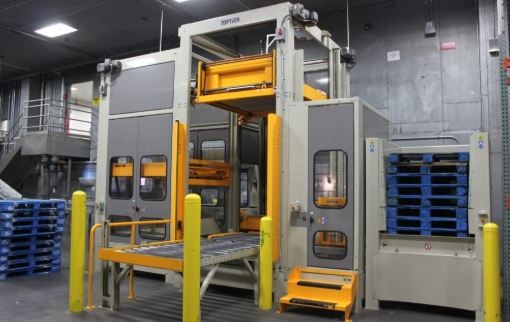
TopTier manufactures warehouse palletizers that support repeatable load formation in demanding production environments. Its conventional and robotic systems help manufacturers address throughput limitations while maintaining consistent product handling.
Improving Availability Through Reliable OperationManual palletizing depends on worker availability and physical handling capacity. Automated equipment maintains predictable operating sequences throughout scheduled production periods.
TopTier's conventional palletizers use controlled product handling to build consistent loads. Proper equipment selection can reduce interruptions caused by incompatible packaging or inefficient product feeding.
Maintenance planning also influences availability. Tracking fault histories helps facilities identify recurring stoppages and prioritize corrective work before equipment problems disrupt production.
Supporting Performance With Consistent Load FormationPalletizing speed directly affects end-of-line throughput. When incoming cases exceed palletizer capacity, upstream equipment may slow down or stop.
Automated systems maintain repeatable stacking sequences that support predictable cycle times. Manufacturers can compare actual cases per minute against equipment capacity to identify performance gaps.
TopTier's robotic palletizing solutions offer flexible handling for applications with changing product requirements. Selecting an appropriate configuration helps manufacturers maintain consistent output across production runs.
Protecting Quality With Integrated WrappingInconsistent pallet formation can create unstable loads that require correction before production ends. Accurate stacking patterns help manufacturers maintain acceptable finished loads.
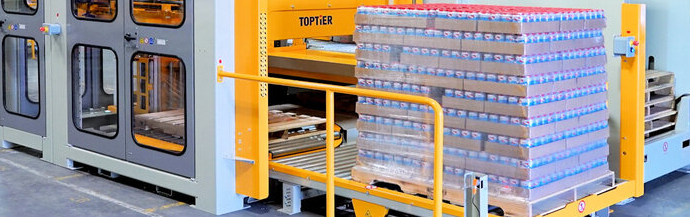
TopTier's concurrent stretch wrapping technology combines palletizing and wrapping within one machine. The system applies stretch film as the load forms, eliminating transfers to a separate wrapping station.
This approach supports consistent load containment and reduces additional handling. Manufacturers can track rejected loads or required rework to determine whether improvements affect their OEE quality measurements.
OEE provides the greatest value when manufacturers use production data to guide equipment improvements. Facility managers should examine recurring interruptions rather than focusing exclusively on overall scores.
Identifying End-Of-Line BottlenecksA packaging line may experience frequent interruptions even when individual machines operate efficiently. For example, insufficient palletizer capacity can force upstream equipment to pause while completed loads leave the production area.
Managers should compare incoming case rates with actual palletizing throughput. If cases accumulate before the palletizer, the equipment may lack sufficient capacity or experience excessive cycle delays.
Monitoring these interruptions helps manufacturers determine whether conveyor coordination or pallet discharge processes limit production. Addressing the underlying problem can improve overall line performance.
Choosing the Right Palletizing TechnologyEquipment selection plays an important role in long-term OEE performance. Manufacturers must consider package dimensions and required production speeds when evaluating palletizing technology.
Conventional palletizers often suit high-volume applications with consistent packaging formats. Robotic systems can accommodate applications requiring flexible handling or frequent product changes.
TopTier's experience with both technologies helps manufacturers select configurations that support reliable operation. Matching equipment capabilities to production requirements can reduce avoidable handling delays.
Measuring Improvements Over TimeManufacturers should establish baseline OEE measurements before implementing equipment upgrades. Comparing subsequent results helps managers determine whether operational changes produce meaningful improvements.
For palletizing applications, facilities can monitor downtime minutes alongside actual production throughput. Tracking rejected loads separately also helps identify quality losses that occur before production ends.
Regular performance reviews help maintenance teams prioritize recurring problems. Consistent measurements allow manufacturers to evaluate whether corrective actions improve equipment effectiveness.
Improve Palletizing Efficiency With TopTierUnderstanding equipment performance helps manufacturers make informed decisions about production improvements. Learning how to calculate OEE and improve palletizing efficiency provides a practical foundation for identifying downtime and addressing throughput limitations.
TopTier manufactures conventional and robotic palletizing systems that support consistent load formation and efficient end-of-line operations. Our integrated stretch wrapping technology helps facilities maintain load stability while reducing unnecessary handling. Contact TopTier to discuss equipment solutions that support improved OEE and more reliable production performance.