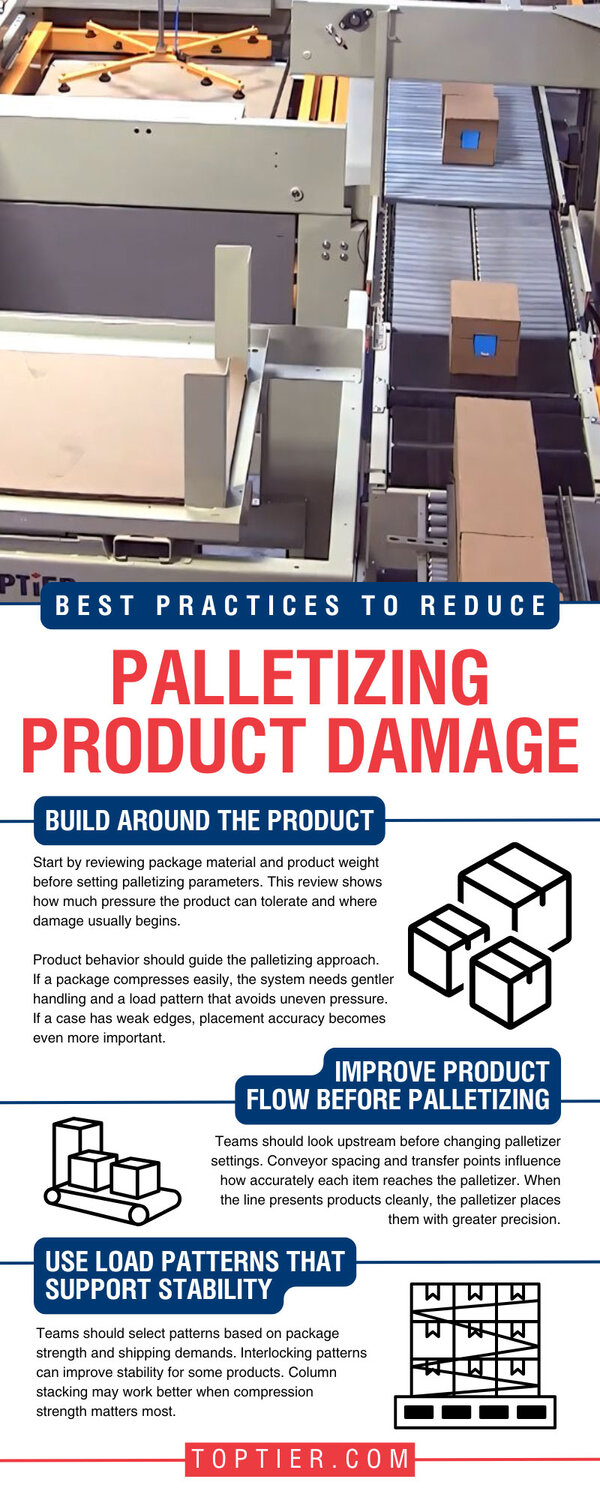
Product damage during palletizing can turn an order into a costly problem before it reaches the dock. Scuffed packaging and unstable loads often trace back to issues inside the palletizing process. Manufacturers that follow best practices to reduce palletizing product damage can protect product quality while improving consistency across shifts. The goal is to build loads that hold their shape through handling and transportation.
Build Around the ProductEvery product brings its own palletizing challenge. A rigid case reacts differently than a soft bag. When teams treat all products the same, they often create load issues that appear later as damaged packaging.
Start by reviewing package material and product weight before setting palletizing parameters. This review shows how much pressure the product can tolerate and where damage usually begins.
Product behavior should guide the palletizing approach. If a package compresses easily, the system needs gentler handling and a load pattern that avoids uneven pressure. If a case has weak edges, placement accuracy becomes even more important.
Improve Product Flow Before PalletizingA palletizer can only perform well when products arrive in a controlled position. If products enter at inconsistent angles, the palletizer must work against that variation. Over time, those inconsistencies affect the load.
Before adjusting palletizer settings, evaluate the upstream conveying system. Conveyor spacing and transfer points influence how accurately each item reaches the palletizer. A consistent product flow allows TopTier palletizers to maintain precise load formation, helping reduce damaged loads while improving production consistency.
Consistent product flow also reduces sudden stops. Smooth movement protects packaging before the load-building process begins. Keeping products stable from the start minimizes unnecessary handling and helps reduce product waste before the pallet is complete.
Use Load Patterns That Support StabilityThe right load pattern protects products by distributing weight across the pallet. A poor pattern may leave unsupported edges or create pressure points. Even a strong package can fail under poor load design.
Load patterns should match both package strength and shipping demands to improve load stability, reduce damaged loads, and minimize product waste during transportation. Interlocking patterns can improve stability for some products. Column stacking may work better when compression strength matters most.
TopTier's experience with both conventional and robotic palletizing allows manufacturers to select load patterns that match product characteristics and production goals. Load pattern reviews should happen whenever a product changes. A new package size can affect stability. Updating the pattern early helps prevent recurring damage after production ramps up.
Protect the Pallet FoundationA damaged pallet can undermine every other improvement. Broken boards and uneven surfaces create an unstable base from the first layer. Once the foundation shifts, the load may lean.
Facilities should remove poor-quality pallets before they reach production. This step prevents many damage issues. A stable pallet gives the system a reliable surface for accurate stacking.
Pallet consistency also matters for automation. When pallet dimensions vary too much, placement points can drift from the intended position. Reliable pallets help the palletizer maintain square loads.
Control Placement AccuracyPrecise placement helps each layer support the next one. When products land too far from the intended position, the stack can lose alignment as height increases. That misalignment often leads to damage during handling.
Equipment calibration should remain part of routine quality control. Verifying placement accuracy after changeovers helps maintain consistent load formation and reduces the likelihood of unstable pallets leaving the line. A small placement error can create a larger issue by the top layer.
Regular inspection of belts, guides, and positioning components keeps placement accuracy within specification. TopTier palletizers deliver repeatable load formation, helping manufacturers improve consistency while reducing rework and product damage.
Reduce Harsh Product HandlingProduct damage often happens when equipment moves too aggressively. Abrupt stops and hard transfers can stress packaging before products reach the pallet. The result may include visible package damage.
Palletizing systems should move products with controlled motion. Speed matters, but it should not come at the expense of product protection. TopTier systems balance throughput with smooth product handling, helping manufacturers increase uptime without sacrificing load quality.
Reviewing recurring damage patterns often reveals opportunities to refine transfer speeds or product handling. Small adjustments can significantly reduce product damage while improving overall line efficiency.
Strengthen Wrapping Without Crushing ProductsStretch wrapping plays an important role in keeping pallet loads secure. However, wrapping cannot fix a poorly built load. It works best when the pallet pattern and product placement already support stability.
Wrapping force should match the product and transportation environment. Proper containment reduces load movement without placing unnecessary stress on packaging, resulting in fewer damaged shipments.
TopTier's integrated concurrent stretch wrapping technology secures each load during palletizing. This process limits load movement, improves consistency, and supports higher production uptime. An integrated approach also helps minimize film waste and supports higher production uptime.
Train Operators To Spot Problems EarlyOperators often notice subtle issues before they become major production problems. A slightly uneven layer or repeated product rotation can signal a developing risk. Strong operator awareness helps facilities correct issues before damage spreads across multiple pallets.
Training should emphasize clear standards for load quality. Operators need to understand the connection between product presentation and final load stability.
Well-trained operators identify small issues sooner, helping prevent downtime and reducing the number of rejected loads. When everyone follows the same quality standards, troubleshooting becomes faster and production remains more consistent from shift to shift.
Use Maintenance To Protect Load QualityPreventive maintenance directly affects product protection. A palletizer with worn guides may still run, but it may not build loads correctly. Damage often increases when equipment performance slowly declines.
Routine inspection of product-handling components helps maintain placement accuracy and reliable load formation. Addressing wear before it affects production improves uptime and reduces the chance of damaged pallets reaching the shipping dock.
Choose Equipment That Supports Damage ReductionThe right palletizing equipment gives manufacturers better control over load formation. Automation can place products consistently and support repeatable patterns across production runs. Consistency matters because many damage issues come from variation.
The best solution depends on production goals, available floor space, and the palletized products. TopTier offers both conventional and robotic palletizing solutions, allowing manufacturers to choose the technology that best supports throughput, flexibility, and long-term reliability.
Advanced controls and repeatable load recipes help maintain consistent pallet quality across shifts. The result is fewer damaged loads, less product waste, and greater confidence that every shipment will arrive as intended.
Reduce Damage With Smarter PalletizingReducing product damage requires more than one adjustment. It depends on a disciplined process that protects the product from the first conveyor transfer through final shipment. Manufacturers that apply best practices to reduce palletizing product damage can build stronger loads, lower waste, and support more dependable delivery performance.
TopTier helps facilities improve palletizing consistency with advanced solutions, including upper-level palletizers designed for accurate load formation and reliable operation. With the right equipment and a practical focus on product protection, operations can move finished goods with greater confidence. Request a quote to optimize your palletizing processes.