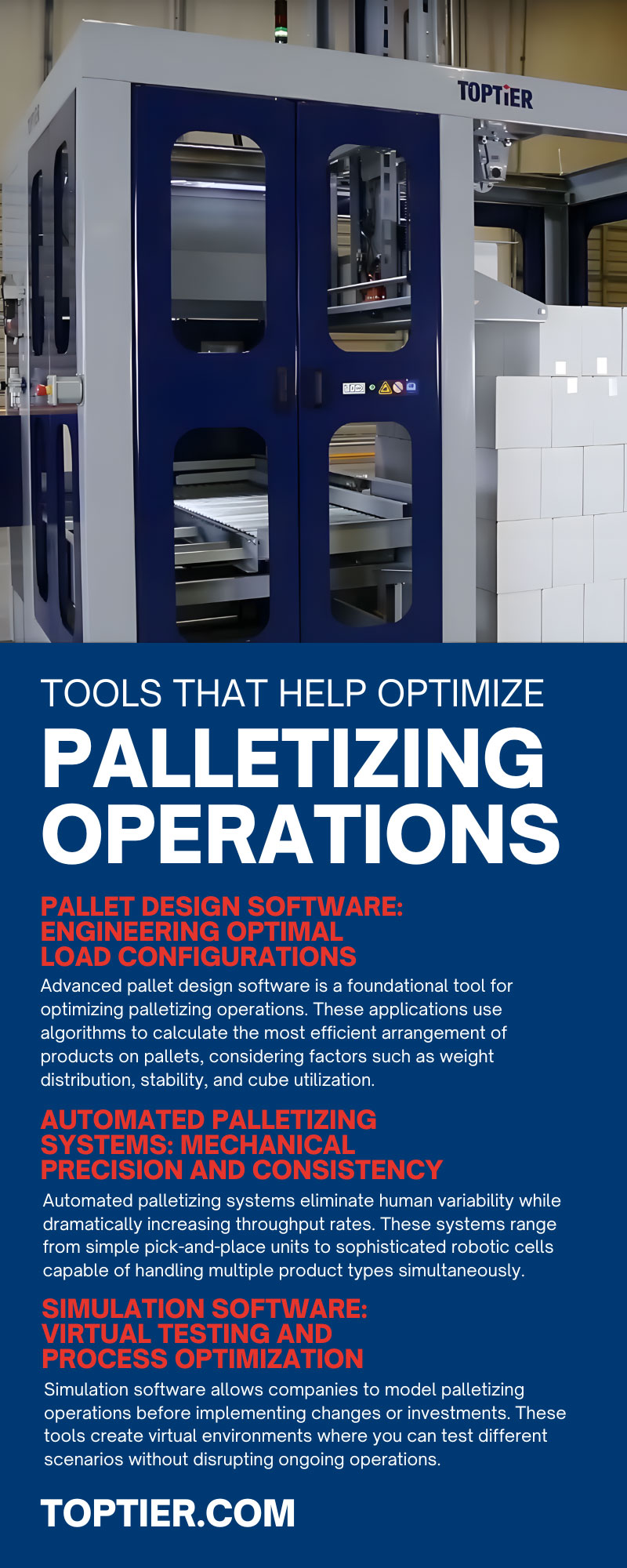
Efficient palletizing operations can make or break your warehouse productivity. When products move smoothly from production lines onto pallets and into storage or shipping, your entire supply chain benefits. But achieving this efficiency requires more than manual labor and good intentions. Modern warehouses need smart tools that help optimize palletizing operations to reduce costs, minimize errors, and keep pace with growing demand. From design software to automated systems, the right technology transforms palletizing from a bottleneck into a competitive advantage.
Understanding the Critical Need for Palletizing OptimizationManufacturing and distribution facilities face mounting pressure to increase efficiency while reducing operational expenses. Palletizing operations often represent a significant portion of warehouse labor costs and can create blockages that impact entire supply chains. Poor palletizing practices result in damaged products, unstable loads, inefficient truck utilization, and increased shipping costs.
The Business Impact of Inefficient PalletizingCompanies struggling with suboptimal palletizing operations experience cascading effects throughout their operations. Unstable pallets lead to product damage during transport, creating costly returns and customer dissatisfaction. Inefficient cube utilization means you need more trucks for the same volume of products, driving up transportation costs and environmental impact. Manual palletizing processes consume valuable labor hours that you could redirect toward higher-value activities.
Modern Challenges Driving Optimization NeedsConsumer expectations for faster delivery times place additional strain on warehouse operations. E-commerce growth has created more complex palletizing requirements, with mixed SKU loads and varying package sizes becoming the norm rather than the exception. Labor shortages across many industries make it increasingly difficult to maintain consistent palletizing quality through manual processes alone.
Overview of Palletizing Optimization ToolsThe landscape of palletizing optimization tools encompasses both physical equipment and software solutions designed to enhance various aspects of the process. These technologies address different pain points, from initial pallet design through final load verification and monitoring.
Categories of Optimization ToolsPhysical automation tools include robotic palletizers, conveyor systems, and integrated packaging lines that reduce manual handling. Software solutions provide design optimization, process simulation, and real-time monitoring capabilities. Hybrid systems combine physical automation with intelligent software to create comprehensive optimization platforms.
Pallet Design Software: Engineering Optimal Load ConfigurationsAdvanced pallet design software is a foundational tool for optimizing palletizing operations. These applications use algorithms to calculate the most efficient arrangement of products on pallets, considering factors such as weight distribution, stability, and cube utilization.
Key Capabilities of Design SoftwareModern pallet design software analyzes product dimensions, weights, and stacking characteristics to generate optimal loading patterns. The software considers pallet specifications, truck dimensions, and shipping regulations to ensure compliance while maximizing efficiency. Advanced versions incorporate stability analysis to predict load behavior during transport and handling.
Benefits Beyond Basic OptimizationDesign software enables companies to standardize palletizing approaches across multiple facilities and product lines. Users can quickly evaluate the impact of packaging changes on palletizing efficiency before implementing costly modifications. The software also helps train operators by providing visual guides for proper pallet construction.
Automated Palletizing Systems: Mechanical Precision and ConsistencyAutomated palletizing systems eliminate human variability while dramatically increasing throughput rates. These systems range from simple pick-and-place units to sophisticated robotic cells capable of handling multiple product types simultaneously.
Types of Automated SystemsConventional palletizers use mechanical arms and programmed movements to stack products in predetermined patterns. Robotic palletizers offer greater flexibility, adapting to different product types and pallet configurations through software changes rather than mechanical modifications. Hybrid systems combine the speed of conventional palletizers with the flexibility of robotic units.
Operational AdvantagesAutomated systems maintain consistent pallet quality regardless of shift changes or operator fatigue. These systems operate continuously without breaks, enabling facilities to maximize production uptime. Advanced systems integrate quality checking capabilities, rejecting improperly stacked or damaged products before they reach shipping areas.
Simulation Software: Virtual Testing and Process OptimizationSimulation software allows companies to model palletizing operations before implementing changes or investments. These tools create virtual environments where you can test different scenarios without disrupting ongoing operations.
Simulation CapabilitiesAdvanced simulation software models entire palletizing lines, including upstream and downstream processes. Users can test different equipment configurations, staffing levels, and product mixes to identify optimal operational parameters. The software can simulate years of operation in minutes, revealing potential bottlenecks and optimization opportunities.
Decision Support BenefitsSimulation results provide data-driven justification for capital investments and process changes. Companies can evaluate multiple scenarios to select the most cost-effective optimization approach. The software also helps predict the impact of seasonal demand fluctuations or new product introductions on palletizing capacity.
Warehouse Management Systems: Coordinating Palletizing With Broader OperationsModern warehouse management systems include specialized modules for palletizing operations, coordinating these activities with inventory management, order fulfillment, and shipping schedules.
Integration CapabilitiesWMS platforms connect palletizing operations with real-time inventory data, ensuring accurate product allocation and reducing picking errors. The systems coordinate palletizing schedules with shipping deadlines and carrier pickup times. Advanced platforms use predictive analytics to anticipate palletizing requirements based on historical demand patterns.
Operational CoordinationWMS integration enables dynamic pallet building based on actual orders rather than predetermined patterns. The systems can prioritize urgent orders or optimize pallet configurations for specific transportation modes. Real-time visibility allows supervisors to identify and address palletizing bottlenecks before they impact shipping schedules.
IoT Sensors: Real-Time Monitoring and Quality AssuranceInternet of Things sensors provide continuous monitoring of palletizing operations, collecting data on cycle times, quality metrics, and equipment performance.
Sensor ApplicationsWeight sensors verify proper loading and detect overweight conditions before pallets leave the production area. Vision systems inspect pallet stability and product alignment, flagging potential issues for correction. Environmental sensors monitor temperature and humidity conditions that might affect product integrity during palletizing.
Data-Driven ImprovementsIoT data reveals patterns in palletizing performance that enable predictive maintenance and process optimization. The continuous monitoring capability helps identify training opportunities for operators and highlights equipment issues before they cause downtime. Integration with other systems creates comprehensive operational dashboards for management visibility.
Selecting the Right Optimization Approach for Your OperationsThe selection of palletizing optimization tools depends on factors including current operation size, growth projections, product characteristics, and budget constraints. Companies should evaluate their specific pain points and operational objectives before committing to particular solutions.
Assessment ConsiderationsFacilities handling high volumes of uniform products benefit most from automated systems, while operations with diverse product mixes may prioritize flexible software solutions. Companies with limited capital budgets can achieve significant improvements through software optimization before investing in automation equipment. Integration requirements with existing systems often influence tool selection decisions.
Implementation StrategySuccessful optimization typically follows a phased approach, beginning with software tools to establish optimal processes before adding automation equipment. Companies should ensure adequate training and change management support to maximize the benefits of new tools. Regular performance monitoring helps identify additional optimization opportunities as operations evolve.
Transform Your Material Handling OperationsThe tools that help optimize palletizing operations continue evolving, offering increasingly sophisticated capabilities for companies seeking competitive advantages through operational excellence. Success requires careful selection of tools matched to specific operational needs and strategic objectives. Companies that invest in the right combination of optimization tools position themselves for sustained growth and profitability in challenging market conditions.
TopTier revolutionizes material handling with innovative floor level palletizers featuring integrated concurrent stretch wrapping and a compact modular design. Our solutions eliminate the complexity and cost associated with traditional palletizing approaches while delivering superior performance and reliability. Request a quote to discover how TopTier can transform your palletizing operations and drive measurable improvements in efficiency and profitability.