Small manufacturers often feel pressure to automate without budgets or floor space available to larger facilities. The right approach does not require automating every task. Instead, cost-saving automation strategies for small manufacturers focus investment on repetitive processes that create labor strain, inconsistent output, product damage, or production bottlenecks. End-of-line palletizing often fits that profile because a well-matched system can improve consistency while allowing employees to focus on work that requires more judgment and flexibility.
Start With the Bottleneck That Costs the MostA cost-effective automation plan starts with the process that creates the greatest operational burden. Small manufacturers should look beyond equipment price and consider where manual work causes overtime, inconsistent loads, or downstream interruptions. Palletizing deserves attention because finished products must transition efficiently from production to storage or shipping.
Automating that process can create measurable benefits without a plant-wide overhaul. Consistent pallet formation can mean fewer damaged loads and less product waste. Reliable cycles can improve uptime by reducing dependence on manual pacing. Targeting a specific constraint gives each investment a clearer purpose and path to payback.
Match Automation To Actual Production NeedsInvesting in automation that exceeds an operation's actual needs can increase costs without delivering meaningful additional value. Equipment should match current production rates, package types, available space, pallet patterns, and realistic growth plans. A manufacturer running a stable mix of cases may need a different solution than a facility handling frequent SKU changes or varied package formats.
TopTier offers both conventional and robotic palletizing technologies, giving manufacturers options based on the application rather than a single automation approach. Conventional row-forming equipment can support applications that demand repeatable patterns and continuous production. Robotic palletizing can make sense when flexibility, multiple products, or layout requirements drive the project. Selecting technology around the actual workload helps control capital costs while protecting future flexibility.
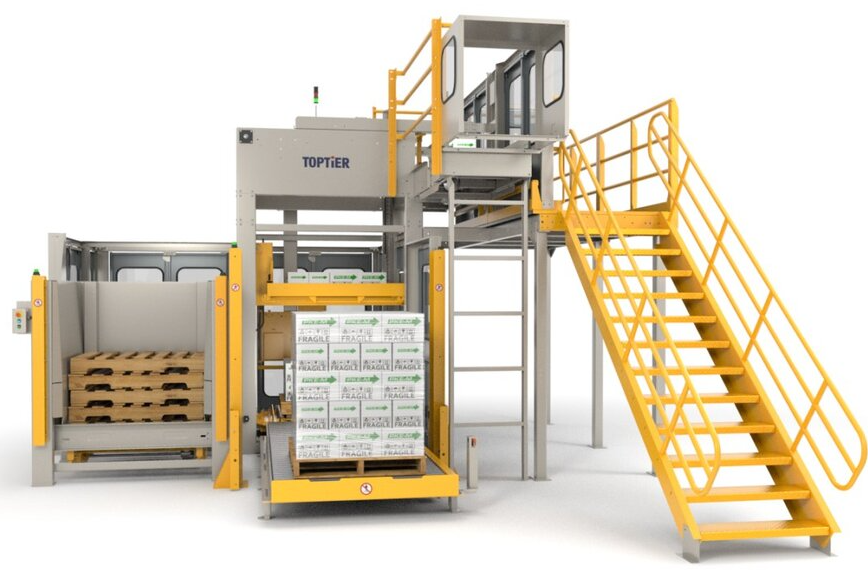
For the right facility, TopTier high-infeed palletizers offer a practical cost-saving automation strategy. These upper-level infeed row-forming systems use shared functional modules and frame systems, which support layout flexibility while creating manufacturing and controls efficiencies. That modular approach can help a smaller manufacturer invest in proven equipment without paying for unnecessary custom engineering.
High-infeed palletizers also keep palletizing activity above the production floor, which can support layouts where floor-level access matters. TopTier's EasyStack® software allows users to store pallet patterns and create new ones through the intuitive interface HMI. Accurate pattern control supports consistent load formation, which can reduce unstable pallets, damaged goods, and rework before products reach customers.
The goal is not simply faster stacking. A well-configured high-infeed system creates repeatable handling through layer formation. Controlled orientation and accurate row building help prevent defective patterns while giving operators a predictable process that does not depend on individual stacking technique.
Reduce Costs Through Better Load FormationA palletizer creates value only if the finished load holds together through downstream handling. Poorly formed layers can create leaning loads or product collisions, leading to rework and avoidable waste. Load formation accuracy therefore deserves as much attention as cycle speed when a small manufacturer evaluates automation.
TopTier's palletizing technology uses controlled product handling to support accurate positioning before rows and layers reach the pallet. For small manufacturers, that precision can translate into several practical improvements:
- Reduce product damage caused by inconsistent placement or unstable pallet patterns.
- Limit rework by creating repeatable loads across shifts and operators.
- Improve uptime by reducing interruptions related to poorly formed pallets.
- Increase shipping consistency so finished loads move downstream with fewer corrections.
Small operations often have less spare labor available to recover from end-of-line problems. Preventing damaged loads protects product and production time while making performance easier to repeat as staffing changes.
Combine Palletizing and Wrapping Where It Makes SenseSeparate machines can add conveyors, controls, floor-space requirements, and maintenance points to an end-of-line layout. TopTier addresses those costs with concurrent stretch wrapping, which integrates wrapping into the palletizing process. TopTier’s system stabilizes the load as it builds each layer, eliminating the need to send the completed pallet to a separate wrapper.
For a small manufacturer, integration can reduce the footprint needed for end-of-line automation and eliminate the need for a separate wrapping machine in suitable applications. Wrapping during pallet formation also supports load stability before the pallet exits the machine. TopTier's film management features can automatically recover from film breaks, helping palletizing continue without requiring an operator to stop production for every interruption.
Integrated wrapping can improve consistency in film application. A repeatable process reduces manual variability and helps manufacturers manage consumable use more deliberately. Coordinating palletizing and wrapping adds automation without another disconnected production step.
Robotic systems can offer strong value when product variety makes a fixed process less practical. A small manufacturer that changes SKUs frequently or handles different package formats may benefit from a robotic cell that can accommodate changing pallet patterns without extensive mechanical changeover.
TopTier's robotic solutions use pallet pattern software and operator-focused controls to simplify operation. Smaller teams may not have dedicated robot programmers on every shift. Easier pattern management can shorten changeovers and help maintain consistent pallet quality as requirements change.
However, robotic automation should solve a real application need rather than serve as the default choice. Manufacturers should evaluate product handling, required rates, end-of-arm tooling, pallet patterns, and available space before selecting a system. Comparing robotic and conventional approaches around those requirements helps prevent overspending while ensuring the chosen equipment can support production reliably.
Plan for Uptime, Training, and Future ChangesThe lowest initial price does not always create the lowest operating cost. Small manufacturers should consider training needs and how equipment fits existing processes. Straightforward controls can reduce training demands while making daily troubleshooting easier.
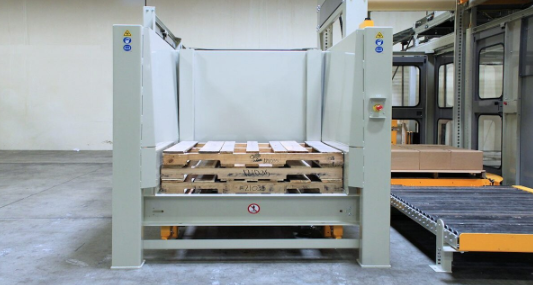
Modular equipment also supports future needs. A system that fits the current layout while supporting added functions can help avoid premature replacement. TopTier's palletizing systems can incorporate options such as pallet handling, sheet handling, and integrated wrapping based on application requirements. Choosing only the functions that create value today can keep the project focused while preserving a path for later changes.
Build Savings Around Reliable End-Of-Line AutomationEffective automation does not require small manufacturers to imitate the largest plants. It requires choosing equipment that solves costly problems, fits the available operation, and delivers repeatable performance. The strongest cost-saving automation strategies for small manufacturers can reduce manual handling, improve load consistency, and protect uptime without unnecessary complexity. TopTier supports that approach with conventional and robotic solutions, including high-infeed palletizers and integrated wrapping options for dependable end-of-line systems.