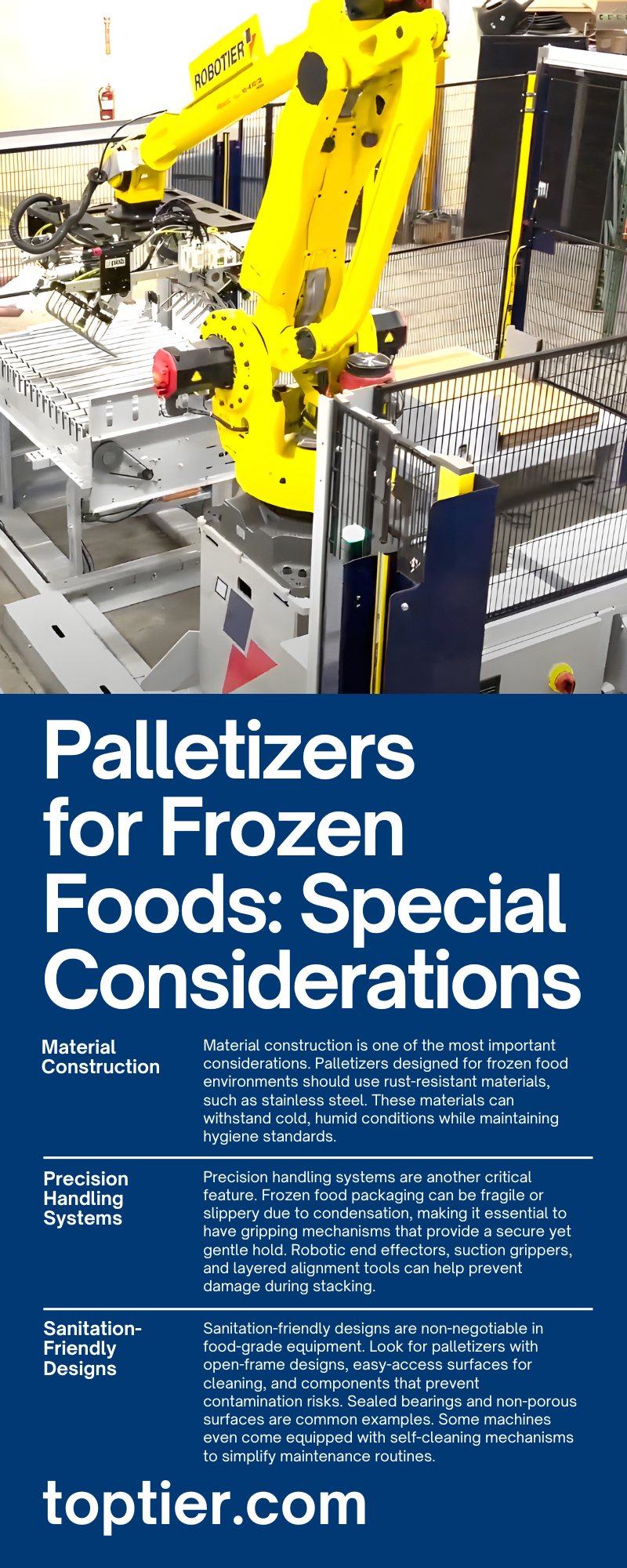
In any production or distribution center, the final steps of packaging and shipping are just as critical as the initial stages of manufacturing. A key component of this end-of-line process is palletizing, the act of stacking goods onto a pallet for transport. An optimized palletizing area is fundamental to the efficiency of the entire supply chain. Learn how to improve your workflow with smarter palletizing layout design to boost productivity, cut costs, and ensure a smooth flow of goods from your facility to their destination.
The Importance of Efficient PalletizingAn efficient palletizing process is the backbone of a streamlined logistics operation. Correctly stacking goods and optimizing the layout allows products to move from the production line to the transport vehicle with minimal delay. This speed reduces lead times and improves customer satisfaction.
Furthermore, a well-organized layout minimizes the risk of product damage during handling and transit, ensuring that items arrive in perfect condition. It also contributes significantly to workplace safety by reducing the need for manual lifting and complex movements, thereby lowering the chances of accidents and injuries. Ultimately, a thoughtfully designed palletizing system translates to lower operational costs, higher throughput, and a stronger competitive edge in the market.
Key Factors Affecting Palletizing WorkflowSeveral variables can influence the effectiveness of a palletizing workflow. The size, weight, and fragility of the products dictate how to handle and stack them. The type of packaging used, whether it be boxes, bags, or other containers, also plays a crucial role in determining the stability of the pallet load.
The volume of products you need to process within a given timeframe determines the system's speed and capacity requirements. The physical space available for the palletizing station, including ceiling height and floor area, imposes constraints on the layout design. Finally, the level of human involvement versus automation will fundamentally shape the workflow, with each approach presenting its own set of advantages and challenges.
Product CharacteristicsThe nature of the product is a primary consideration. You can often stack heavy, durable items in simple, interlocking patterns to maximize stability. Lighter or more delicate products might require specific stacking arrangements or supportive materials to prevent crushing or damage. The shape of the product's packaging also affects how you can arrange it on a pallet to create a secure and compact load.
Production Volume and SpeedHigh-volume operations demand a palletizing system that can keep pace with the production line. Any bottleneck in the palletizing area can cause a backup that ripples through the entire facility, leading to costly downtime. You must design the layout to facilitate rapid movement and processing, allowing for a continuous flow of goods without interruption.
Facility Space and ConstraintsThe physical environment of the facility places firm limits on layout possibilities. A successful design works within these constraints, making the most of available space. This includes planning for clear pathways for forklifts and other equipment, ensuring adequate clearance around machinery, and positioning the palletizing station strategically to minimize travel distances for products and personnel.
Smart Palletizing Layout StrategiesCreating an intelligent palletizing layout involves a strategic approach to space, flow, and equipment placement. The goal is to design a system where every element works in harmony to support an uninterrupted and efficient process. This begins with analyzing the complete flow of materials, from the end of the production line to the loading dock.
A linear flow path is often the most effective, as it eliminates cross-traffic and reduces the potential for congestion. Products should move in a straight line from the conveyor to the palletizer, and then to the stretch wrapper and staging area. This simple, direct route minimizes handling time and reduces the complexity of the operation.
Another key strategy is to centralize the palletizing function. Instead of having multiple, disparate palletizing stations, consolidating this activity into a single, well-equipped area can improve oversight and resource allocation. This approach allows for the use of more advanced, high-capacity equipment and makes it easier to manage labor. You should also design the layout with ergonomics in mind.
For manual or semi-automated systems, configure workstations to minimize bending, reaching, and lifting, which helps to reduce worker fatigue and improve safety. Providing ample space around the palletizer for pallet dispensers, slip sheet applicators, and finished load removal is also essential for maintaining a smooth workflow.
Technology and Automation in PalletizingModern technology offers powerful tools for optimizing palletizing operations. Robotic palletizers, for instance, can handle heavy loads and perform repetitive stacking tasks with a level of speed and precision that is difficult for human workers to match. You can program these robots with multiple stacking patterns, allowing them to adapt to different product types on the fly. Automated guided vehicles (AGVs) transport pallets from the palletizing station to wrapping or shipping areas, reducing manual work and allowing employees to focus on higher-value tasks.
Advanced software systems also play a critical role. Palletizing software can calculate the most efficient stacking patterns to maximize pallet density and stability, reducing shipping costs and the risk of in-transit damage. Integrated with a warehouse management system (WMS), this software offers real-time visibility into palletizing, allowing managers to monitor performance, track inventory, and make data-driven decisions to boost efficiency.
Measuring and Improving Palletizing PerformanceTo ensure that your palletizing layout is performing at its best, it is essential to establish key performance indicators (KPIs) and regularly monitor them. Metrics such as pallets per hour, cycle time per pallet, and equipment uptime provide a clear picture of the system's efficiency. Tracking the rate of product damage and the number of workplace incidents can also highlight areas where safety and handling procedures need improvement.
Regularly reviewing this data will help identify bottlenecks and opportunities for optimization. For example, if cycle times are consistently high, it may indicate a problem with equipment placement or a need for faster machinery. If product damage rates are a concern, a re-evaluation of stacking patterns or packaging may be necessary.
Continuous improvement is a cyclical process of measuring performance, identifying issues, implementing changes, and then measuring again to verify the impact. This data-driven approach ensures that your palletizing workflow evolves and adapts to meet changing demands.
Enhance Your Workflow With TopTierImproving workflow with smarter palletizing layout design is not just about arranging equipment; it is about creating a dynamic, integrated system that supports your entire operation. By focusing on smart design, leveraging technology, and focusing on continuous improvement, you can build a palletizing process that is both efficient and reliable.
TopTier's range of high-infeed palletizers can enhance your palletizing process, delivering the precision, speed, and reliability needed to thrive in a competitive market. Our solutions integrate seamlessly into your existing layout, elevating your workflow to new levels of performance and safety. Explore the future of palletizing with TopTier today.