By Breana Woods | Marketing Specialist at TopTier
Manufacturers Continue Facing Workforce and Production Pressures
Manufacturers across the United States continue to face a familiar challenge in 2026: maintaining output with tighter labor availability, rising operational costs, and increasing pressure to improve efficiency without sacrificing reliability.
While labor shortages are not new to the industry, the conversation has evolved.
For many manufacturers, the issue is no longer simply filling open positions. It is maintaining:
- consistent production performance
- workforce stability
- throughput reliability
- operational efficiency across shifts
Automation Investment Continues to Increase
According to Deloitte’s 2026 Manufacturing Industry Outlook, manufacturers continue prioritizing:
- automation technologies
- smart manufacturing initiatives
- operational efficiency improvements
- digital production visibility
The report notes that many companies are increasing investment in automation hardware, analytics, and operational technologies to improve resilience and productivity.
At the same time, facilities are balancing those investments carefully.
Many manufacturers are not pursuing automation solely to reduce headcount. Instead, they are focused on:
- improving throughput consistency
- minimizing downtime
- supporting existing teams
- reducing dependence on difficult-to-fill manual roles

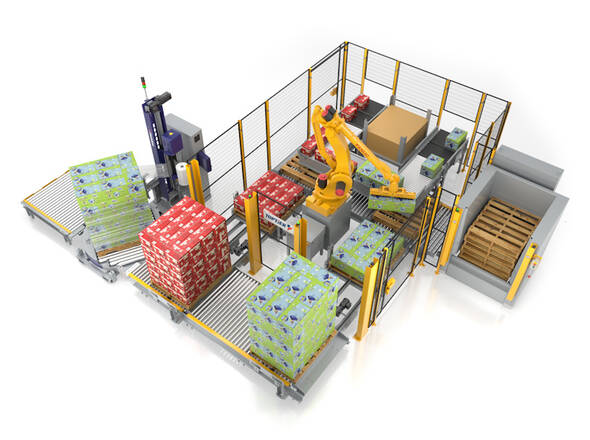
End-of-Line Operations Remain a Key Focus Area
That shift is especially visible in end-of-line operations.
Manual palletizing and packaging processes can create operational bottlenecks in high-volume environments, particularly when facilities experience:
- labor turnover
- fluctuating staffing levels
- increasing production demands
Even short disruptions at the end of the line can affect:
- upstream productivity
- packaging flow
- shipping schedules
Workforce Demands Continue to Shift
Recent industry reporting also indicates that the manufacturing workforce itself continues to change.
According to Deloitte labor analysis referenced by Manufacturing Dive:
- production occupations have gradually declined
- technical manufacturing roles continue to grow
- facilities are increasing adoption of automation technologies
This transition is occurring while many manufacturers continue:
- expanding domestic operations
- reshoring production
- increasing capacity in food & beverage, CPG, warehousing, and industrial sectors
Operational Reliability Is Becoming a Larger Priority
According to McKinsey, manufacturers are placing increasing emphasis on:
- workforce retention
- operational stability
- employee upskilling
- long-term productivity improvements
For operations leaders, the result is a growing focus on reliability and consistency.
Facilities are placing greater importance on:
- reducing unplanned downtime
- maintaining steady throughput
- improving operator ergonomics and safety
- supporting lean staffing models
- increasing production visibility
- minimizing variability across shifts
Automation planning is increasingly tied to those operational priorities rather than broad “future factory” initiatives.
Modernization Efforts Are Becoming More Targeted
Rather than fully redesigning production lines, many facilities are evaluating incremental improvements in areas experiencing the greatest operational strain.
End-of-line automation, palletizing, stretch wrapping, and material handling often become part of those conversations because they directly impact:
- throughput
- labor utilization
- shipping readiness
- operational consistency
Industry analysts expect these trends to continue throughout 2026 as manufacturers navigate workforce challenges, economic uncertainty, and rising expectations around operational efficiency.
Looking Ahead
For many operations teams, the focus is becoming increasingly practical:
How can facilities maintain reliable output, support workforce stability, and continue meeting production demands in a more constrained operating environment?
That question is expected to remain central to manufacturing strategy well beyond 2026.
Download our Palletizing Readiness Checklist to help evaluate your current end-of-line operation.
Sources
Deloitte Insights — 2026 Manufacturing Industry Outlook
https://www.deloitte.com/us/en/insights/industry/manufacturing-industrial-products/manufacturing-industry-outlook.html
McKinsey & Company — US Manufacturing's Next Test: Building a Workforce for a New Era
https://www.mckinsey.com/capabilities/people-and-organizational-performance/our-insights/us-manufacturings-next-test-building-a-workforce-for-a-new-era
Manufacturing Dive — 5 Manufacturing Trends to Watch in 2026
https://www.manufacturingdive.com/news/5-trends-watch-2026-tariffs-uncertainty-ai-workforce-chemical-investments/809109/
Supply Chain Digital — Deloitte: Reshoring and AI Power 2026 US Supply Chains
https://supplychaindigital.com/news/deloitte-reshoring-ai-2026-us-supply-chains
Connection — State of Manufacturing: Navigating Uncertainty and Building for 2026
https://community.connection.com/state-of-manufacturing-navigating-uncertainty-and-building-for-2026/