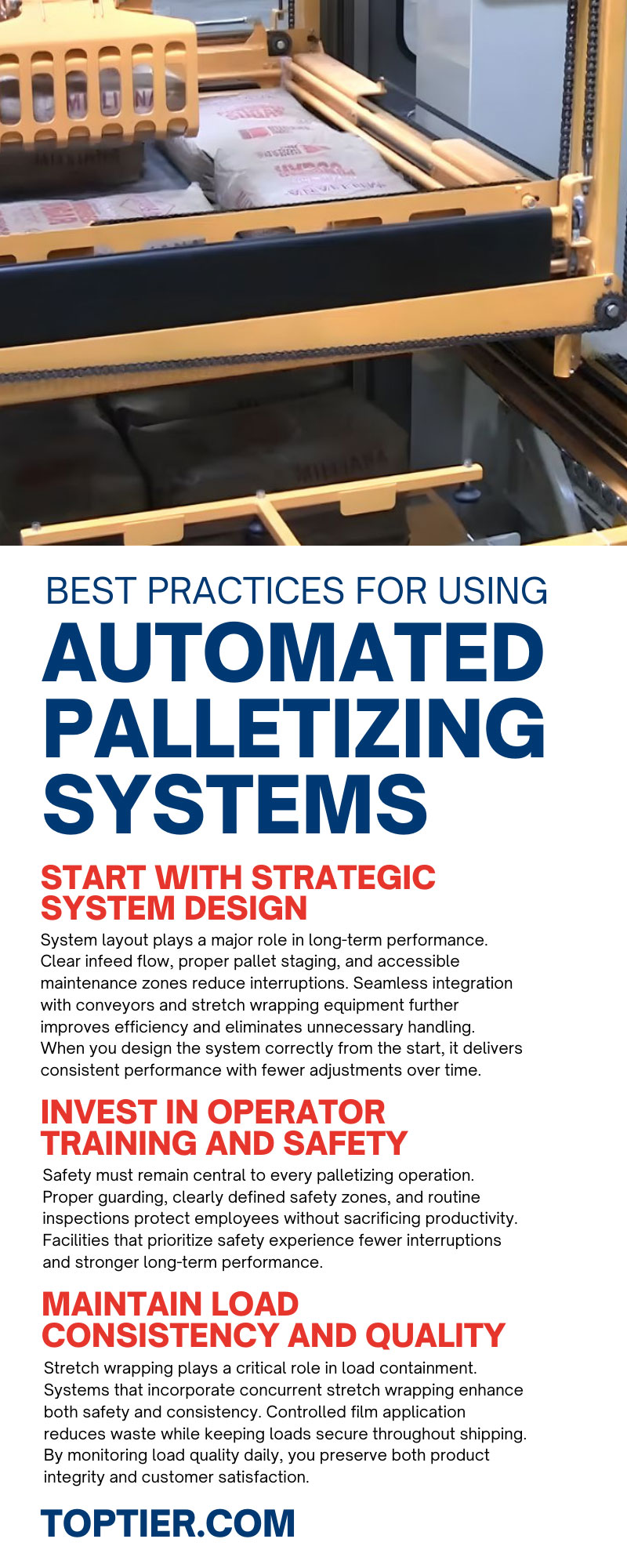
Automated palletizing has become essential for manufacturers and distribution centers focused on efficiency and consistency. As production speeds increase and labor challenges continue, facilities must optimize end-of-line operations to stay competitive. Understanding the best practices for using automated palletizing systems helps you maximize uptime, protect your workforce, and maintain load quality.
Start With Strategic System DesignEvery successful palletizing operation begins with thoughtful planning. You must evaluate throughput requirements, product dimensions, SKU variation, and available floor space before selecting a system. Choosing the right configuration ensures the equipment supports both current demand and future growth.
System layout plays a major role in long-term performance. Clear infeed flow, proper pallet staging, and accessible maintenance zones reduce interruptions. Seamless integration with conveyors and stretch wrapping equipment further improves efficiency and eliminates unnecessary handling. When you design the system correctly from the start, it delivers consistent performance with fewer adjustments over time.
Invest in Operator Training and SafetyAutomated systems still rely on skilled operators. Comprehensive training ensures your team understands system controls, changeovers, and troubleshooting procedures. Confident operators respond quickly to minor issues and prevent small disruptions from escalating.
Safety must remain central to every palletizing operation. Proper guarding, clearly defined safety zones, and routine inspections protect employees without sacrificing productivity. Facilities that prioritize safety experience fewer interruptions and stronger long-term performance.
Ongoing training keeps operators aligned with evolving production needs. As product lines or packaging requirements change, your team should adapt without compromising efficiency.
Maintain Load Consistency and QualityConsistent pallet loads protect products during transport and reduce costly damage claims. Automated palletizing systems create repeatable patterns, but maintaining performance requires oversight. Regularly inspect pallet condition, case alignment, and layer formation to ensure stability.
Stretch wrapping plays a critical role in load containment. Systems that incorporate concurrent stretch wrapping enhance both safety and consistency. Controlled film application reduces waste while keeping loads secure throughout shipping. By monitoring load quality daily, you preserve both product integrity and customer satisfaction.
Commit To Preventative MaintenancePreventative maintenance is one of the most important best practices in automated palletizing. Scheduled inspections of motors, belts, sensors, and robotic components help prevent unexpected downtime. Addressing wear early protects productivity and extends equipment life.
Maintaining a clean environment also supports consistent operation. Dust and debris can interfere with sensors and moving parts. Routine cleaning and lubrication keep systems performing at peak levels.
Facilities that rely on proactive maintenance consistently outperform those that operate reactively.
Plan for Flexibility and GrowthModern operations require palletizing systems that adapt to changing demands. Product lines expand, packaging evolves, and order volumes fluctuate. Your system should handle these changes without major disruption.
Robotic palletizers offer flexibility for facilities managing multiple SKUs, while conventional systems deliver reliable high-volume performance. Selecting the right solution ensures you balance adaptability with throughput. Planning for scalability protects your investment and positions your facility for continued growth.
Build a Stronger End-Of-Line OperationApplying the best practices for using automated palletizing systems ensures your operation remains safe, efficient, and reliable. Strategic design, proper training, consistent load management, and preventative maintenance all contribute to long-term success.
TopTier enhances these results with hybrid robotic palletizers designed to keep your business productive and competitive. By combining the flexibility of robotics with proven palletizing performance, TopTier helps facilities maintain efficiency, improve safety, and adapt confidently to evolving production demands.