By Breana Woods | Marketing Specialist at TopTier
Why 2026 Budgets Are Shifting to Scalable End-of-Line Automation
The manufacturing landscape in mid-2026 is no longer friendly to slow, cautious experimentation. For the past several years, plant floors frequently served as testing grounds for localized software pilots and isolated robotic trials. While these small-scale projects looked excellent in corporate presentations, they often stalled out when faced with the harsh, high-throughput reality of a real production environment.
Today, the luxury of waiting has completely vanished. Emerging industry statistics indicate that a staggering one-third of average operational budgets are now dedicated entirely to technology and automation integration.
This massive influx of capital comes with a strict mandate from executives and plant managers alike: Move past the pilot phase, eliminate long engineering cycles, and deploy rugged, scalable solutions that yield immediate ROI.
The Catalyst: What is Driving the Shift?
This aggressive transition from "testing technology" to "scaling throughput" is driven by three distinct macro-economic pressures facing packaging lines this month:
Compounding Labor Inflation: Manufacturing wages and the persistent shortage of reliable line operators mean that manual stacking and wrapping are no longer financially or operationally viable. End-of-line automation is no longer viewed as a basic efficiency upgrade—it is an essential staffing solution.
The Push for Peak OEE: With margins tighter than ever, facilities are hyper-focused on Overall Equipment Effectiveness (OEE). Any component of a production line that creates a bottleneck, requires frequent downtime for changeovers, or demands specialized programming code directly damages profitability.
The Squeeze on Physical Space: Real estate and building expansion costs remain prohibitively high. Manufacturers are under immense pressure to increase their daily throughput significantly without expanding the physical footprint of their existing facility.
Transitioning from "Custom Complexity" to "Turnkey Scalability"
When manufacturers move out of the pilot phase, they quickly realize that overly complex, highly customized robotic setups often introduce more problems than they solve. Long installation windows, complex programming requirements, and delicate components simply do not survive the rigors of a continuous, multi-shift plant.
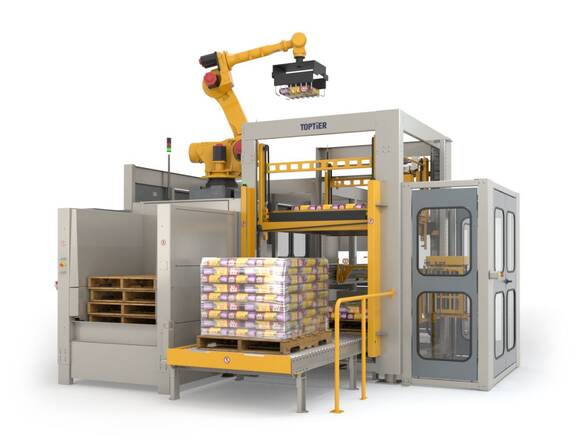
Instead, the dominant trend among top-tier facilities is the deployment of modular, turnkey packaging hardware. Industrial buyers are heavily favoring reliable high-level and low-level palletizers that can be deployed rapidly, blend into existing line configurations seamlessly, and be operated by existing floor staff without complex software engineering.
How TopTier Validates the New Automation Baseline
At TopTier Palletizing Solutions, our engineering philosophy has always aligned with this exact need for rugged, scale-ready dependability. We design systems that bypass the headaches of traditional custom automation:
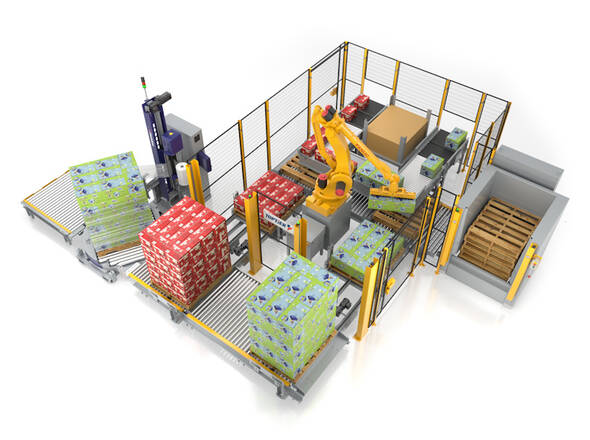
Concurrent Stretch Wrapping: To maximize OEE and drastically minimize the physical footprint of your packaging line, TopTier’s patented concurrent stretch wrapping handles load stabilization while the pallet is being built. This eliminates the need for standalone wrappers and transport lines, saving valuable floor space and instantly preparing loads for the shipping dock.
No-Code Operator Empowerment: True scalability means your floor operators—not specialized programmers—control the line. TopTier’s intuitive HMI and pattern-generation software allow plant staff to easily manage line changeovers and generate new stacking patterns on the fly.
Modular Engineering: By utilizing standardized, field-proven modular designs, we eliminate the lengthy, unpredictable engineering cycles that plague traditional custom integration projects. Your system is built for rapid deployment and immediate runtime.
The Bottom Line
The data from 2026 makes it clear: the competitive divide in manufacturing is now drawn between the plants still caught in endless technology trials and the plants executing automation at scale. Maximizing your throughput and shielding your operations from labor constraints requires proven, heavy-duty machinery at the end of your line.
Ready to Stop Testing and Start Scaling?
Don't let an outdated end-of-line bottleneck limit your facility's daily throughput. Contact our engineering team today to see how TopTier's rugged, turnkey palletizers can seamlessly integrate into your current floor plan and instantly boost your OEE.
👉 Request a Custom Palletizing Consultation
Industry Data & References
Global Smart Manufacturing Benchmark Insights: Data tracking the strategic transition from technology pilot programs to scaled enterprise implementation.
Otto Motors - 11th Annual State of Smart Manufacturing Report (www.ottomotors.com/resources/ebooks/11th-annual-state-of-smart-manufacturing-report/)
Manufacturing Executive Consensus Trends: Regional and global metrics regarding digital transformation adoption rates, OEE optimization, and competitive necessity.
Smart Manufacturing Today - Rockwell Automation State of Manufacturing Report (smartmanufacturingtoday.com)
Industrial Capital Expenditure Shifts: 2026 executive survey details covering technology budget allocations and end-of-line integration priorities.